One of the most significant tools today in nursing education and practice is nursing concept maps, which help students and nurses to connect the complex and fragmented clinical information in a coherent and systematic manner. They are considered the graphic maps that relate patient information and nursing actions with diagnoses and outcomes, thereby enabling nurses to make informed and fast decisions.
You are a student of nursing preparing to complete the clinical assessment or are a registered nurse seeking to improve the tactics of care, concept maps knowledge as to how to draw and utilize the concept maps will significantly contribute to your career advancement. This in-depth guide will establish the meaning of a nursing concept map, key components of this map, and why it is of immense importance in the medical world.
You will also develop the confidence and proficiency to use concept mapping as a means of patient-centered healthcare and professional growth by engaging in lifelong learning.
What is a Nursing Concept Map?
A nursing concept map is a visual, structured tool that defines the complicated relationships among the aspects of patient care in a structured manner. A concept map, which is a visual representation of information, usually has one central theme or topic around which everything else is organized. It is mainly focused on the primary health problems or nursing diagnoses of the patient and further extends to areas related to the first one, such as symptoms, risk factors, medical history, diagnostics, and nursing interventions.
Nursing students and professionals may find concept maps extremely beneficial as they break down intricate clinical situations into simpler parts that are easier to understand and prioritize the patients’ needs. The visualization of interactions between various factors, given by mapping all of the available information, will help the nurses develop more efficient care plans. The application of concept maps in the classroom enable students to remain calm while engaged in activities related to their profession.
Key Elements of a Nursing Concept Map
- Central Concept
- Related Concepts
- Assessments
- Diagnoses
- Interventions
- Outcomes
- Connecting Lines
- Linking Phrases
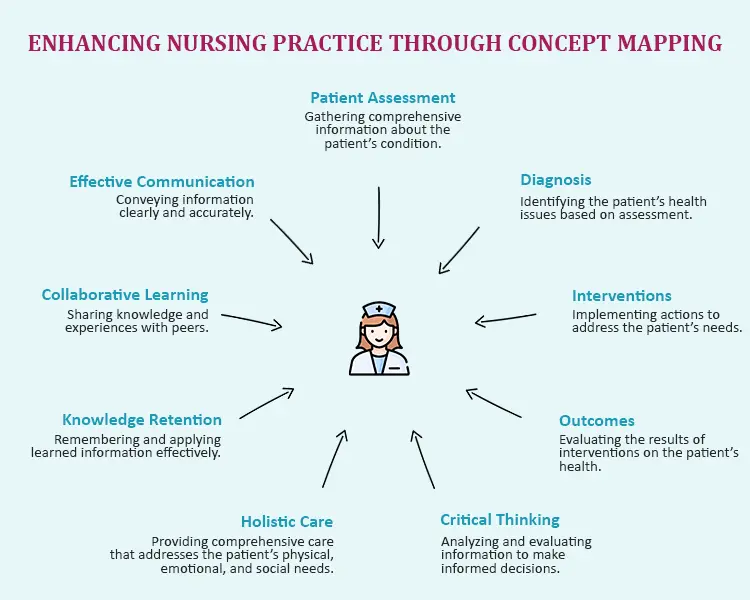
Clinical Purpose of Nursing Concept Map:
- Organizes patient data for easy comprehension.
- Boosts critical thinking and clinical reasoning.
- Assists in recognizing patient problems and health issues.
- Makes it easier to come up with good care plans.
- Enhances communication among healthcare teams.
- Encourages comprehensive, patient-focused treatment.
- Directs the prioritization of nursing actions.
- Makes it easier to learn and use nursing theory.
- Brings to light weaknesses in assessment and care.
- Increases patient outcomes by means of preemptive planning.
Types of Nursing Concept Map
- Spider Map: This is a visual representation in which the concepts of nursing are arranged around an initial concept, which includes relationships and connections. The various branches cover various facets, and they will aid in brainstorming and learning complicated issues.
- Hierarchical Map: This map is a map that orders the nursing concepts in a hierarchical manner, indicating the levels of significance. It helps in understanding as it demonstrates the association between concepts belonging to general groups to particularities.
- Flowchart Map: A representation in form of a series diagram, which presents nursing procedures or decision-making pathways, or protocols for discussion. This visualization format makes it easier to see the steps of patient care or clinical practice, thus enabling clearer and faster problem-solving.
- System Map: The comprehensive representation of the communication and connection between the various constituents of nursing such as patient care, healthcare systems and stakeholders. It highlights the interrelationship and dynamics involved in the nursing practice.
Benefits in Nursing Education and Practice
Nursing education and practice provide an important basis of healthcare and advance the expertise and knowledge of professionals. This synergy ensures quality patient care, critical thinking, and lifelong learning by the nursing professionals. The advantages are listed as follows:
- Enhanced Learning and Retention:
The concept map facilitates active learning by engaging students in organizing and integrating information. This graphic tool assists in the comprehension of difficult concepts, hence increasing knowledge on retention of nursing theories and practices.
- Improved Critical Thinking:
Concept maps promote skills of critical thinking by decomposing patient data and relationships. Nurses are able to break down relationships among various aspects of patient care, resultantly in them making more effective clinical choices and decisions.
- Effective Problem-Solving:
Concept mapping allows nurses to systematically determine and rank problems in patients. Such an organized practice helps to create specific care plans that will better meet the needs of patients, similar to the structured thinking required when learning what are the 7 steps for writing an assignment?
- Collaboration and Communication:
The concept maps are common visual aids that improve communication between nursing teams and other healthcare professionals. They allow a clear summary of patient information and care plans, enhancing patient management cooperation.
- Holistic Patient Care:
The suggested maps prompt nurses to focus on the whole experience of the patient that involves emotional, physical and social attributes. This holism results in more detailed and individualistic care plans.
- Preparation for Clinical Practice:
The educational process of nursing students benefits from the incorporation of concept maps as it helps them develop skills, which can be directly used in the clinical area. They make the students ready to think critically and to sort information in a way that is most efficient for the given high-pressure situations.
- Continuous Professional Development:
Concept maps are very supportive in the learning process and alteration of nursing practice. Nurses through continual mapping can learn the latest theories, interventions, and outcomes constantly, thus their practice is continually improved.
- Empowerment and Confidence:
The skills related to the development and use of concept maps enhance the self-efficacy of nursing students and professionals to deal with complex patient cases. This empowerment increases work-related satisfaction and career development.
Key Components of Effective Nursing Concept Maps
The concept maps within the nursing field make sense and need a clear structure upon which patient information is clearly arranged, and combine clinical judgment to make a decision regarding the care. These maps assist nurses in visualizing multifaceted associations among health concepts and nursing actions, which enhances comprehension and leads to a positive patient outcome.
Core Elements Framework
- Primary Focus: The primary health problem or diagnosis of nursing in the middle of the map.
- Relevant Concepts: Symptoms, assessments, risk factors, and interventions that stem from the main concept.
- Related Lines & Linking Phrases: Visual lines and phrases describing relationships between concepts.
Clinical Judgment Integration
- Prioritization: Assists in identifying and prioritizing important issues of patients.
- Decision-Making: Integrates the links between symptoms, diagnoses, and treatments, thereby helping in clinical reasoning.
- Holistic Care: Assists in emphasizing physical, mental and social aspects in the treatment approach.
Further if you face any issue then you can take help from our Do My Assignment service. Our experienced writers are there to assist you 24/7 on any issue you may have.
Step-by-Step Creation Process
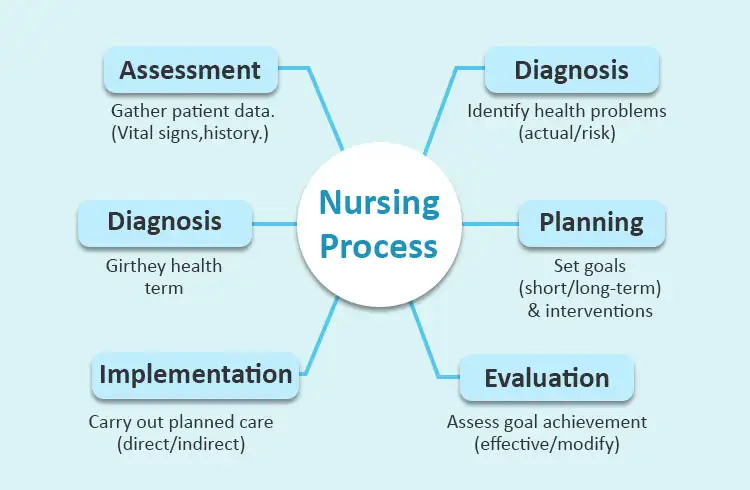
The development of a nursing concept map is based on a structured method of gathering information about the patient, determining the primary issues, and structuring data visually to help in effective care planning. The process assists nurses and students in relating theory to practice through the dissection of complex clinical situations into interrelated manageable components.
Phase 1: Collect the Information of the Patient
The patient's records need to be very thoroughly reviewed, and such review should include medical history, current symptoms, vital signs, lab results, and psychosocial aspects. Objective data (which can be measured) and subjective data (the patient's individual experiences) have been prepared for collection.
Phase 2: Identify the Problem and Prioritization
Discuss the data obtained and determine the primary health concerns or nursing diagnoses in the patient. These problems are to be prioritized by severity and immediacy to signify what should be addressed the most to aid the organization of care and provide efficiency in it.
Phase 3: Development of Concept Map
Begin with the overall idea, which is the main nursing diagnosis. Then spread out to related concepts like symptoms, risk factors, assessment, interventions and anticipated outcomes. Connecting lines and linking phrases can be used to demonstrate relationships and encourage the clarity, an approach also recommended in how to write a physics assignment when presenting structured academic reasoning.
Nursing Concept Map Templates
Nursing concept map templates are very useful and important instruments at the same time for managing and arranging the information about patients, facilitating the development of one's thinking and the whole procedure of care through a well-structured visual presentation of nursing diagnoses and interventions.
Basic Nursing Concept Map Template
The most straightforward nursing concept map template is designed to display the fundamental patient details as a visual image and link different critical areas like assessment data, nursing diagnosis, nursing interventions, and expected outcomes. This practice allows students to develop critical thinking skills and to establish a connection between theory and actual clinical care decision-making. Students who struggle with organizing academic content often benefit from tools like an assignment tracker to manage clinical and theory-based workloads.
Concept Map Structure
Central Concept: Put the primary health problem or diagnosis of the patient at the centre.?
Similar Concepts: Branch out to include symptoms, risk factors, medical history, diagnostics, interventions, and recovery goals.?
Linking Lines/Arrows: Lines or arrows are used to connect concepts and short notes are given to explain the relationships between the concepts like cause-and-effect or contributing factors.?
Categories to Include:
- Risk Factors/Etiology
- Signs & Symptoms
- Diagnostics
- Nursing Diagnosis
- Interventions
- Expected Outcomes?
How to Build the Map?
- Begin by placing the main diagnosis or problem in the middle.
- Add significant categories (presented above) as primary branches with branches off.
- Develop each branch further into specific sub-contents, such as definitive symptoms or sample interventions.?
- In using arrows or lines, indicate interrelationships, such as those between symptoms and interventions and those between outcomes and interventions.
- Be precise and clear- this is to ensure that every detail can be linked to the core issue of the patient.
Advantage:
- Assists students in picturing and planning patient care.?
- Facilitates clinical thinking and clinical decision-making through depicting the connection between concepts.?
- It is a self-directed method of pre- and post-clinical assessment review.?
Comprehensive Clinical Concept Map
The comprehensive clinical concept map is a graphical illustration that shows the whole picture of the patient-related data and helps the student to comprehend and select the most appropriate care. It enhances the understanding of the whole issue by demonstrating the connections among manifestations, medical diagnosis, treatments, and patients' results.
Structure of a Clinical Concept Map
Central Concept: This is the primary diagnosis or primary health problem of the patient that will be located in the center of the map.?
Significant Branches: Radiate out of the center and cover such categories as assessment findings, risk factors, abnormal lab results, patient history, nursing diagnoses, interventions, and expected outcomes.?
Making Lines and Links: Arrows are to be used to indicate the relationship between ideas. Connecting lines, to clarify connections, add short notes like, leads to, aggravated by or managed with.?
Prioritization: Mark out the most urgent problems which have to be tackled at the first instance (e.g. unstable vital signs) and those which could be attended to or checked at a later stage.?
Steps to Make a Clinical Concept Map
- Put the main diagnosis or health problem under consideration in the center.?
- Branch out symptoms, risk factors, assessment findings, labs, nursing diagnoses, and care interventions.?
- Draw arrows with words that describe the relationship between causes and effects or management strategies.?
- Make notes on the most pressing problems.?
- It's important that all details are correct and give the direction about the patient.
Learning Benefits:
- The students can acquire good clinical reasoning, judgment, and decision-making abilities when they watch the relationship between important data points.?
- The holistic and complex aspect of these maps can enable the learner to value the complexity of patients and holistic care to facilitate care planning and interaction with the health care team.?
- Concept maps promote thorough thinking and simplified review and comprehension of clinical encounters in order to learn pre-clinically and post-clinically.?
System-Specific Templates
Specific nursing concept map template designed to assist nursing learners in focusing specific attention on a specific body system or clinical condition and structuring patient knowledge to develop an understanding and clinical reasoning.
What is a System-Specific Nursing Concept Map?
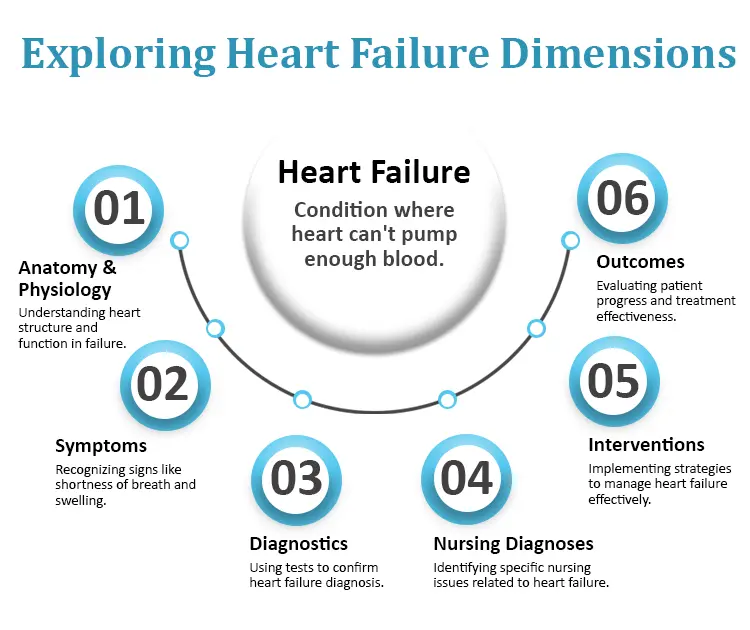
A diagrammatic representation revolves around a particular body system or disorder, with its branches dividing into symptoms, pathophysiology, diagnostics, nursing diagnosis, interventions, and expected outcomes. This method gives the students the opportunity to gain an in-depth comprehension of the system and be able to plan the care of the patient greatly.
Key Features of System-Specific Templates
Main Focus: The center should display the system of the body or the main health ailment (e.g., Respiratory System - COPD).
Important Categories Branches:
- Anatomy/Physiology of that system.
- Clinical manifestations and symptoms.
- Specific system diagnostic tests.
- Frequent nursing diagnoses in conditions of the system.
- Interventions (patient education, therapies, medicines).
Expected Patient Outcomes?
- Connection Phrases and Arrows Use: To indicate relations of cause and effect (e.g., “inflammation causes obstruction”) and rationales of interventions.?
- Prioritization: Identify urgent issues and prioritize nursing activities that are pertinent to the system.?
How does it help students Learn?
- Concentrates focus on a specific clinical area, enhancing command of the complicated details of a system and disorders.?
- Promotes the combination of anatomy, pathophysiology, assessment, and care planning on a specific topic to develop enhanced clinical reasoning.?
- Allows visualizing the relationship of different points of patient data more clearly within a system, which can allow students to predict complications and develop comprehensive care.?
Condition-Specific Nursing Concept Map Examples
Nursing concept maps that are specific to conditions are important nursing tools that allow nurses to visually arrange and interrelate important patient data concerning certain health disorders. Some nursing concept map examples of condition-specific nursing concept maps will be presented along with their real-life applications in nursing practice.
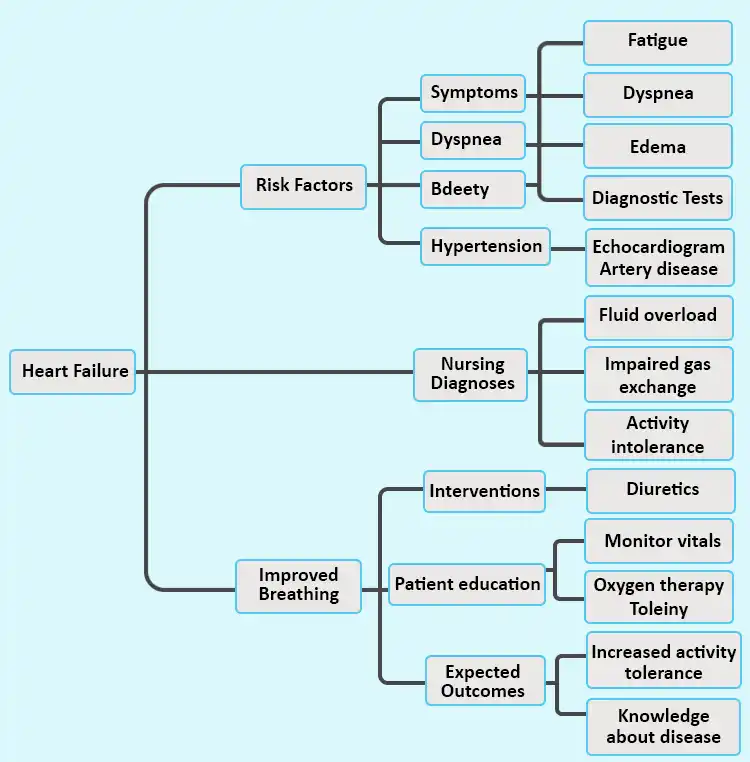
Congestive Heart Failure (CHF) Concept Map:
- Write "Congestive Heart Failure (CHF)" in the middle of the diagram.
- Characterize heart's failure to pump blood in a way that the body needs.
Add Causes/Risk Factors:
- Problems with heart valves
- Weakened muscle of the heart (cardiomyopathy)
- High blood pressure
- Diabetes
- Age and gender factors
Symptoms are included:
- Swelling in legs and feet (edema)
- Persistent cough
- Rapid heart rate (palpitations)
- Shortness of breath
- Fatigue
Incorporate Diagnostic Tests:
- Echocardiogram
- Electrocardiogram (EKG)
- Chest X-ray
- Blood tests (BNP, metabolic panel)
List Nursing Diagnoses:
- Activity intolerance
- Decreased cardiac output
- Excess fluid volume
- Mention Treatment Options:
- Medications (ACE inhibitors, diuretics, beta-blockers)
- Lifestyle changes (low-sodium diet, exercise)
- Surgery options if required
Include Nursing Interventions:
- Monitor lung sounds and oxygen saturation
- Patient Weight checks to detect fluid retention daily
- Provide support in self-care
- Educate the patient on medication adherence and reporting symptoms
Add Patient Education Points:
- Diet restrictions necessity
- Weight monitoring requirement
- Worsening symptoms of recognition ability
End with Outcomes/Evaluations:
- Better oxygenation
- Symptoms relief
- Patient self-care ability is there without the drawback of excessive fatigue
Annotations:
Nursing relies heavily on annotations because they help to explain terms and simplify the difficult-to-understand concepts, leading to better comprehension.
Annotations motivate nursing learners and help them to take notes on the most important things in books and lectures; thus, memory and understanding are both improved.
Moreover, annotations provide students with quick references for study purposes, allowing them to come back to the basics and insights concerning patient care, hence making exam preparation easier.
NCLEX Focus :
For the NCLEX, cardiovascular failure should be well-understood by nurses, particularly its manifestations.
The NCLEX puts a premium on precise evaluations that also consider the patient's essential signs and the presence of any fluid.
Part of the preparation involves patient education on lifestyle alterations, strict compliance with medications, and awareness of symptoms to avoid complications.
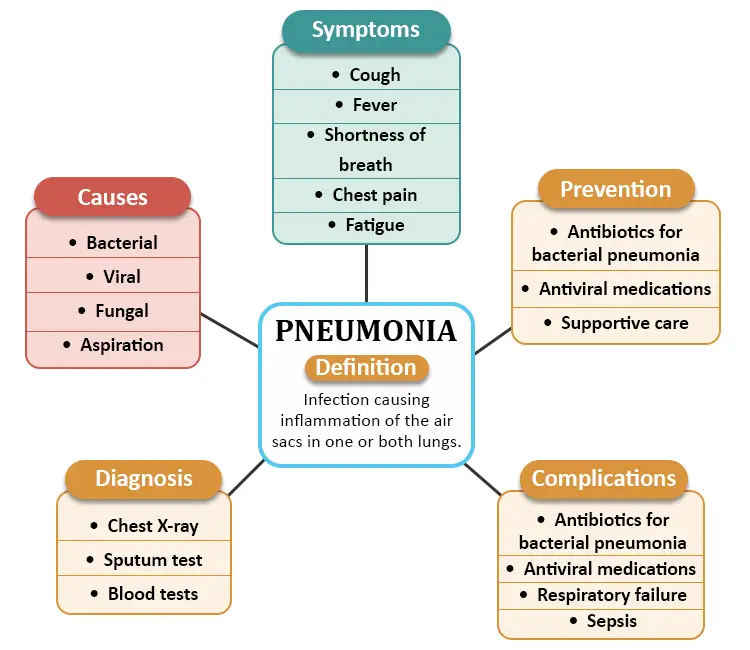
Pneumonia Concept Map
In the center of the diagram put “Pneumonia”. Define it as an infection that brings about inflammation and accumulation of fluid in the alveoli of the lungs, thereby hindering the process of gas exchange and causing respiratory distress.
Make branches for Causes/Risk Factors, Diagnostic Test, Nursing Diagnoses, Nursing Interventions, and Patient Education.
Causes / Risk Factors
- Bacterial or viral infection (e.g., Streptococcus pneumoniae, influenza)
- Older age, infants, or an immunocompromised state
- Chronic diseases (COPD, diabetes, heart failure)
- Smoking, chronic alcohol use
- Prolonged immobility or hospitalization
- Poor hand hygiene and exposure to infectious individuals?
Symptoms
- Fever, chills, and sweating
- Productive cough
- Shortness of breath, rapid breathing
- Chest pain worsened by breathing
- Crackles, wheezing, or decreased breath sounds on auscultation
- Cyanosis or blue coloring of the lips/nail beds?
Diagnostic Tests
- Chest X-ray
- Sputum culture
- Blood cultures
- Complete blood count (CBC) for elevated white blood cells
- Arterial blood gases (ABGs) for oxygenation status?
Nursing Diagnoses
- Ineffective airway clearance
- Impaired gas exchange
- Ineffective breathing pattern
- Risk for infection
- Acute pain (pleuritic)
- Activity intolerance
- Ineffective thermoregulation (fever)?
Nursing Interventions
- Monitor respiratory status
- Administer oxygen as prescribed
- Position the patient in semi- or high-fowler’s for lung expansion
- Encourage coughing, deep breathing, and fluid intake
- Administer prescribed antibiotics and antipyretics
- Maintain infection control with hand hygiene and PPE?
Patient Education Points
- Finish all prescribed antibiotics
- Practice good hand hygiene
- Avoid contact with sick people
- Get recommended vaccinations
- Recognize and report worsening symptoms
- Stay active but balance with adequate rest?
Annotations
For effective treatment, key evaluation data such as respiratory rate and oxygen saturation must be in accordance with nursing actions.
During care planning, always take into account patient's symptoms such as cough and fever.
For coordinated patient care, effective communication is a must among healthcare teams.
Med-Surg Focus
Nurses are to observe complications of pneumonia such as respiratory failure and sepsis.
It is very important to educate patients on pneumonia prevention, among which are vaccination and hygiene practice.
The patients’ awareness regarding the symptoms and treatment importance grows in proportion to their self-care and compliance.
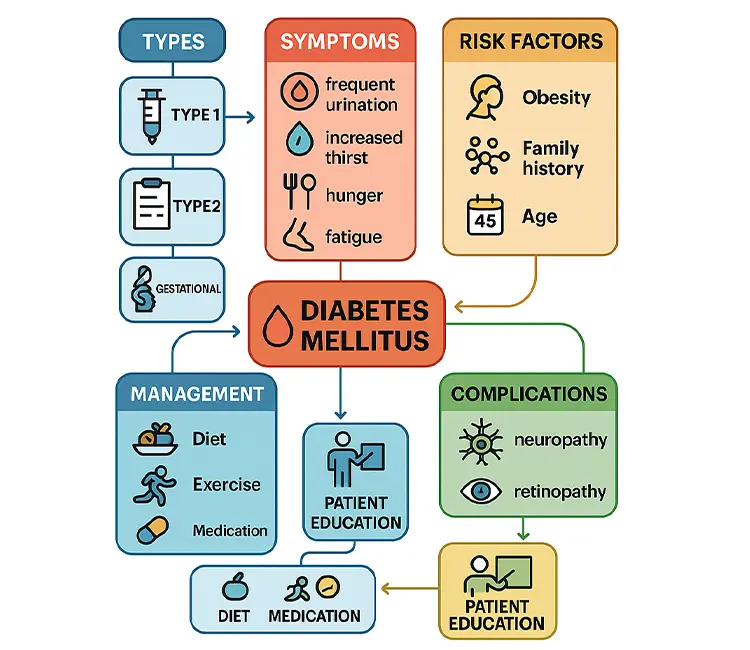
Diabetes Mellitus Concept Map
Place the term “Diabetes Mellitus” in the center of the diagram. Describe it as a lifelong metabolic disorder characterized by elevated blood sugar levels caused by the lack of insulin or by the body's inability to use insulin effectively.
Causes/Risk Factors:
- Genetics
- Obesity
- Sedentary
- Autoimmun
- Insulin-resistance
Symptoms:
- Polyuria
- Polydipsia
- Polyphagia
- Fatigue
- Blurred-vision
Diagnostic Tests:
- Fasting-glucose,
- HbA1c
- OGTT
- Blood-glucose
Nursing Diagnoses:
- Hyperglycemia
- Infection-risk
- Ineffective-management
Nursing Interventions:
- Monitoring
- Medication
- Diet
- Exercise
- Education
Patient Education:
- Medication-adherence
- Diet
- Footcare
- Hypo/hyperglycemia-recognition
Outcomes/Evaluation:
- Glucose-control
- No complications
- Self-care ability
Annotations:
It is very important to inform the patient about diabetes, which should include symptoms as well as the complications that may arise.
Patients who are actively involved in their treatment get better results.
Patients benefit from community resources and support groups.
Chronic Care Focus:
Monitoring of blood glucose levels in the long run and having constant check-ups with the healthcare providers are very important.
The preventive measures consist of giving attention to eyes and feet, controlling blood pressure, and getting vaccinated.
Eating a proper diet, being physically active, and having the right weight are major factors in controlling diabetes.
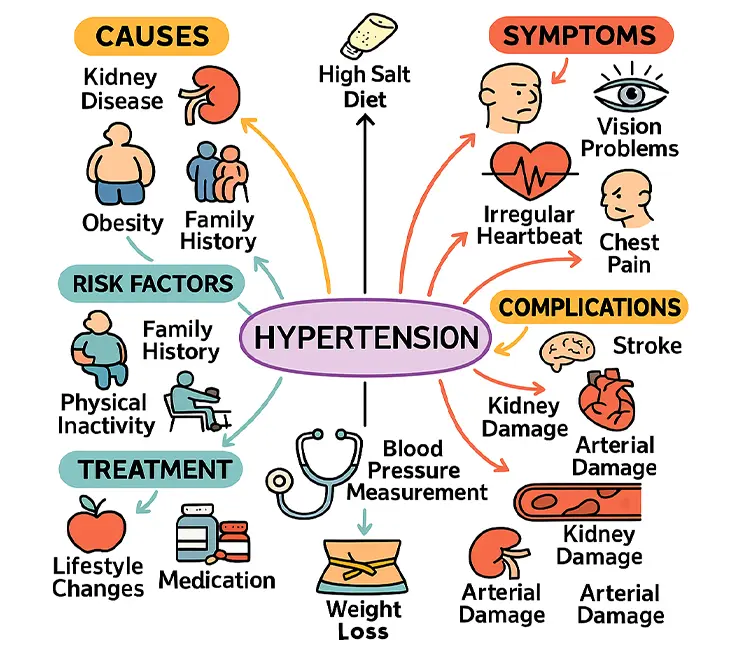
Hypertension Concept Map
In the central position of the diagram, write "Hypertension". Describe it as a lasting condition that is characterized by continually high blood pressure caused by either increased resistance in the blood vessels or a greater amount of fluid.
Causes/Risk Factors:
- Genetics,
- Obesity,
- Salt
- Alcohol
- Smoking
- Age
- Stress
Symptoms:
- Headache
- Dizziness
- Fatigue
- Palpitations
- Nosebleed
Diagnostic Tests:
- BP
- ECG
- Urinalysis
- Blood-glucose
- Cholesterol
Nursing Diagnoses:
- Hypertension
- Risk-Stroke
- Ineffective-Coping
Nursing Interventions:
- Monitoring
- Medication
- Diet
- Exercise
- Education
Patient Education:
- Diet
- Exercise
- Medication
- Stress
- Smoking
Outcomes/Evaluation:
- Controlled
- No-Complications
- Adherence
- Understanding
Annotations:
Take into account personal risk factors such as age and lifestyle for hypertension.
Follow a healthy diet, cut down on salt, and eat more fruits and vegetables.
Keep exercising and manage your weight to avoid the onset of hypertension.
Community Health Focus:
Patient education about hypertension will include its causes and control measures.
Enhanced lifestyle changes, including diet and physical activity as the main ones will be suggested.
The emphasis will be on support, check-ups, and medication adherence as long-term management strategies.
Specialized Concept Map Applications
Specialized concept maps have been developed solely for the different nursing areas' of pediatrics, mental health, and critical care, thus catering to their specific requirements. The maps are sensitive to the field's specifics, thereby ensuring that the care plans are not only thorough but also evidence-based and patient-centered.
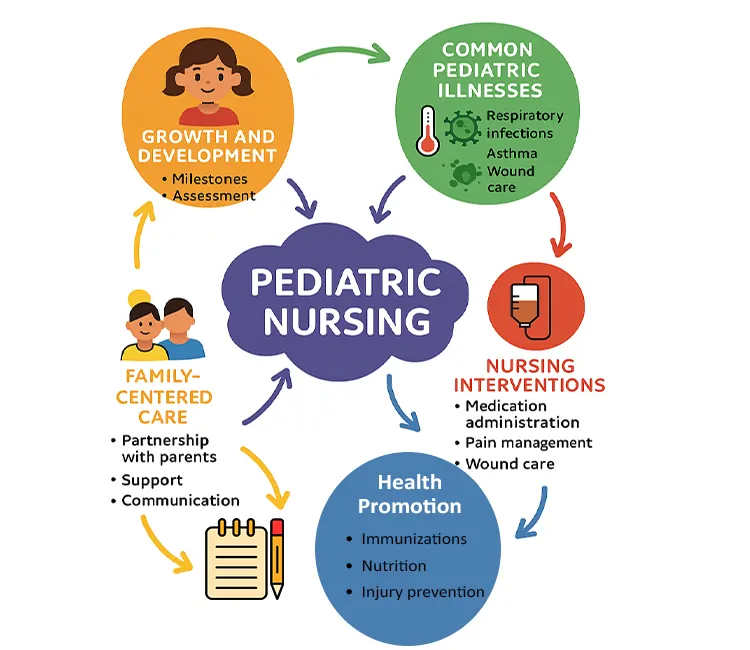
Pediatric Nursing Concept Maps
Pediatric Nursing Concept Maps are tools that can be used to organize and connect all the information about the child’s health, development, and family support, thus making it easier to understand, to make decisions, and to provide tailored nursing care for the little patients.
Age-Specific Considerations
- Assessment
- Communication
- Safety
- Nutrition
- Comfort
- Mobility
- Medication
- Play
Growth and Development Integration
- Milestones
- Observation
- Adaptation
- Stimulation
- Education
- Support
- Evaluation
- Continuity
Family-Centered Care Approaches
- Collaboration
- Empathy
- Inclusion
- Advocacy
- Respect
- Participation
- Education
- Empowerment
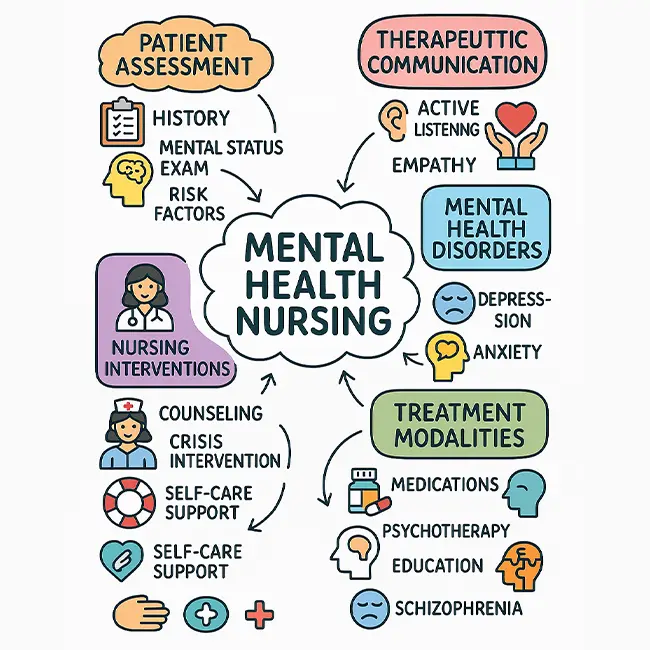
Mental Health Nursing Concept Maps
Mental Health Nursing Concept Maps are very helpful in organizing patient information visually, thus promoting critical thinking, improving therapeutic communication, guiding behavioral interventions, ensuring safety, and helping clinical decision-making for comprehensive and effective mental health care planning.
Therapeutic Communication Integration
- Empathy
- Active-listening
- Validation
- Rapport
- Trust
- Reflection
- Clarification
- Support
- Respect
- Presence
Behavioral Interventions
- Reinforcement
- Modeling
- Desensitization
- Redirection
- Reward
- Consistency
- Motivation
- Structure
- Engagement
- Observation
Safety and Risk Assessment
- Observation
- Awareness
- Prevention
- Environment
- Supervision
- Evaluation
- Precaution
- Protection
- Documentation
- Collaboration
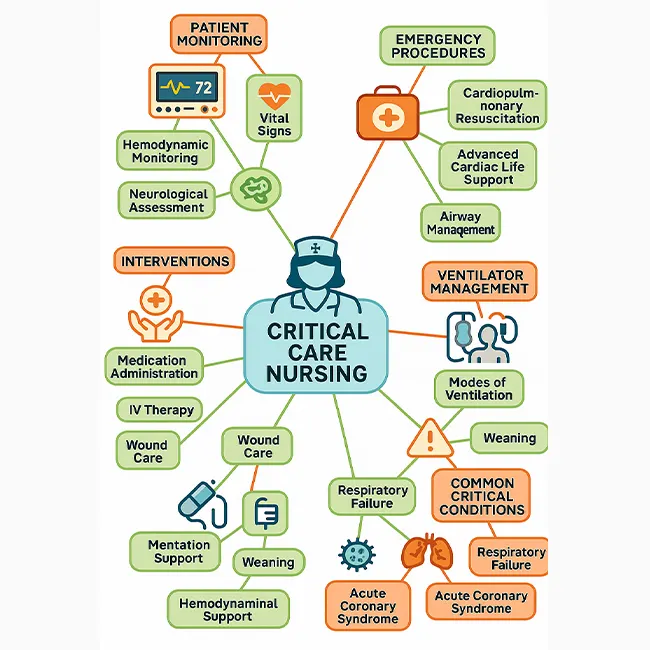
Critical Care Concept Maps
Critical Care Concept Maps are a visual representation of the crucial processes involved in patient care, connecting hemodynamics, life support, and medications. They help doctors think better, speed up decision-making and make the patients safer even in the most critical areas of the hospital.
Hemodynamic Monitoring Integration
- Assessment
- Pressure
- Flow
- Perfusion
- Balance
- Output
- Stability
- Oxygenation
- Trends
- Interventions
Advanced Life Support Protocols
- Recognition
- Response
- Airway
- Breathing
- Circulation
- Defibrillation
- Medications
- Teamwork
- Documentation
- Review
Complex Medication Management
- Dosing
- Timing
- Compatibility
- Interactions
- Infusions
- Adjustments
- Monitoring
- Titration
- Safety
- Evaluation
Digital Tools for Nursing Concept Mapping
The nursing concept maps have gone through a radical transformation thanks to the digital tools, which have made the processes of creation, sharing, and clinical integration much easier. Usage of EHR and mobile apps has enabled nurses to access patient data visually, record their actions and communicate properly among the multiprofessional teams.
EHR Integration Strategies
The incorporation of concept maps into electronic health records (EHRs) enables seamless documentation and allows timely updates, thereby enabling all healthcare providers to be informed of the latest patient data. The use of this integration not only promotes but also strengthens the medical decision-making process.
Incorporating Concept Maps into Electronic Documentation
Digital concept maps can be integrated into EHRs to visualize relationships among patient data, nursing diagnoses, interventions, and outcomes.?
The nurses are allowed to make changes to the maps as new information becomes available, keeping the care plans alive and responsive to the patient's evolving needs.
Maps integrated into EHRs make it easier for different disciplines to work together; as a result, doctors, nurses, and other team members can see and participate in the patient’s care plan.
Using Standardized Nursing Languages (NANDA, NIC, NOC)
Digital concept mapping tools usually provide support to the nursing standard terminologies like NANDA, NIC, and NOC.?
Standardized languages help to maintain uniformity in the documentation, enhance communication, and make it easier for the practitioners to follow the researches and use it.
Software and App Recommendations
Nursing concept mapping is now supported by a wide range of digital tools and applications, which are designed for both students and practicing nurses.
Mind Mapping Software for Nursing Students
Best Mind Mapping Software for Nursing Students (Top Tools Compared 2026) | Tool Name | Key Features | Best For |
| Canva | Free nursing concept map template, easy customization, and collaboration | Students, quick projects |
| Lucidchart | Advanced diagrams, EHR integration, team sharing | Clinical teams, educators |
| MindMeister | Real-time collaboration, cloud storage | Group projects, students |
| Nursing Concept Map Generator | Nursing concept map template, mobile-friendly | Clinical rotations, students |
| Evernote | Note organization, tagging, search | Documentation, notes |
| Microsoft OneNote | Digital notebooks, integration with the Office suite | Comprehensive care plans |
Mobile Apps for Clinical Rotation Use
- Nursing Concept Map Generator: Mobile apps that are specifically created for nursing students allow fast making and modifying of concept maps, thus supporting learning and documentation wherever one may be.
- Evernote: This application is helpful for storing and organizing patient information, notes, and concept maps by providing features for tagging and searching of the content.
- Microsoft OneNote: It provides a platform for nurses to set-up electronic notebooks that have concept maps intertwined, thus aiding both solo and cooperative care planning.
Assessment and Evaluation Framework
A set of procedures must provide for fair and transparent evaluation of educators and students in clinical training.
Grading Rubrics for Educators:
- The scoring of student performance should be based on unambiguous and objective criteria that are easy to understand.
- Consider things such as clinical reasoning, skill accuracy, communication, and professionalism.
- Apply the same criteria throughout to minimize bias and foster student learning.
Clinical reasoning assessment:
- Student focus is on analyzing patient data from a theoretical angle to making informed decisions and applying learned knowledge optimally in their profession.
Self-Assessment for Students
- It motivates students to think about their own achievements and spot the areas where they can grow.
- Uses prompts that include putting reflection, which allows concept maps to refine and deepen understanding.
Clinical judgment development tracking:
- Monitors student progress in developing their critical thinking and decision-making skills during clinical experience.
Common Challenges and Solutions
Nursing concept mapping can be challenging, especially for beginners. Common issues include overcomplicating or oversimplifying maps and missing critical connections. Effective strategies and a nursing concept map template help overcome these obstacles and improve clinical reasoning.
Beginner Mistakes and Corrections
Beginner Mistakes in Nursing Concept Maps & How to Correct Them | Mistake Type | Common Errors | Corrections & Tips |
| Overcomplicating | Too many branches, excessive detail | Focus on key concepts; use concise linking phrases |
| Oversimplifying | Missing key connections, vague links | Ensure all major symptoms, risks, and interventions are included; clarify relationships |
| Missing Connections | No clear links between concepts | Use arrows and linking phrases to show cause-and-effect or relationships |
Time Management Strategies
- Time will be saved by classifying related data (symptoms, risks, interventions) clearly under the corresponding categories.?
- During fast-paced shifts, the use of a nursing concept map template and standardized formats will enable the rapid creation of maps.?
- Begin with the main diagnosis, include major symptoms and interventions, and for quick visualization, use short linking phrases.
Advanced Concept Mapping Techniques
The advanced concept mapping technique revolutionizes the conventional healthcare mapping by turning it into an interactive tool that combines evidence, team collaboration, and patient management. It enriches the methods of patient care and enables health scientists to bridge the gap between research, practice, and patient results in a more efficient way.
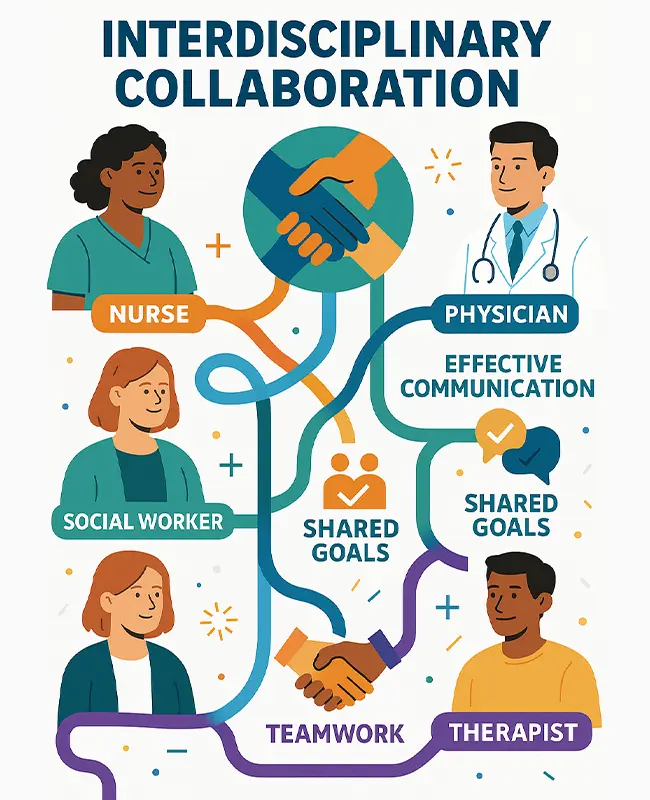
Interdisciplinary Collaboration Maps
A patient's care journey is made up of many different specialists—doctors, nurses, therapists, pharmacists, social workers, and administrative staff—each one of them providing different perspectives which are based on their knowledge and experience. Teamwork among different professional groups is the common thread that binds those diverse points of view and leads to the attainment of all-encompassing care objectives.
As an example, a physician's attention is on diagnosis and treatment whilst a nurse's is on the management of daily patient care; in addition, the pharmacist makes sure the patient's medications are safe and social worker helps the family with psychosocial problems. The mapping of these interactions serves to identify the communication overlaps and gaps, resulting in improved communication and a smoother workflow.
Evidence-Based Practice Integration
The combination of Evidence-Based Practice Integration involves research, clinical skills and patient preferences, thus improving medical decisions and outcomes, ensuring treatments are scientifically grounded and personalized according to individual needs.
- Incorporating Current Research into Care Planning
By means of concept mapping, medical practitioners are capable to see the relationship between new research outcomes and patient care decisions, thus making the evidence available and it is easier to do it on the daily practice.
- Clinical Guideline Implementation
Concept maps represent complicated clinical guidelines in the form of step-by-step procedures, highlighting what needs to be done and at the same time minimizing the chance of making mistakes in the process of delivering care.
- Framework: Research-to-Practice Mapping
A map from research to practice depicts the connection of published studies to the practical clinical steps, making it certain that new evidence is used directly in healthcare interventions and is therefore easy to track and improve in terms of accountability.
Conclusion
Nursing concept maps or nursing care plans are highly important instruments in nursing education and practice, as they do not only help in summing up and clarifying the complicated patient data but also in visualizing the data in a more understandable way. The concept maps demonstrate the relationships among different aspects such as diagnoses, symptoms, assessments, interventions, and outcomes, which is very helpful in promoting critical thinking and communication within the health care teams. Students who seek additional guidance often rely on nursing assignment help to better understand how to structure and present these concept maps effectively in their academic work.