By 2026, science fairs will move forward with ideas, novelty, and contribute towards a real difference in the world. The students deal with the help of AI, innovations that are friendly to the climate, and experiments that develop the mind and teach problem-solving. It can be a bit of a task to come up with a project that is new, suitable for the age, and at the same time very impressive for the jurors. This guide offers a thoroughly selected list of science fair project ideas classified by grade and subject. Students in elementary, middle school, and high school will find these ideas useful for shining through, attracting attention, and having a good time while doing so.
The Science Fair Success Framework: Before You Choose an Idea
When selecting a science fair project, it is very important to first know yourself, your materials and your goals. Good planning will allow students to not only discover ideas that are practical and appealing but also those which will attract the judges' attention and make the whole process enjoyable and rewarding.
What Makes a Winning Project?
The characteristics of a winning science fair projects are the presence of a well-defined, testable question, a good hypothesis, control of variables, and the collection of measurable data. The judges are impressed by the clearly planned and accurate results, which are the basis for success.
Hypothesis
Definition: A definable prediction that can be tested.
Example: “When ice cubes are put into salt water rather than fresh water, then the ice cubes in the salt water will melt more slowly.”
Controlled Variables
Definition: Factors that do not vary to guarantee a fair outcome.
Example: “Take ice cubes of equal size, equal amounts of water, the same type of container, and the same temperature in the room in all tests.”
Measurable Data
Definition: Information that can be documented and analyzed objectively.
Example: “Measure the time spent in minutes at which each of the ice cubes melted.”
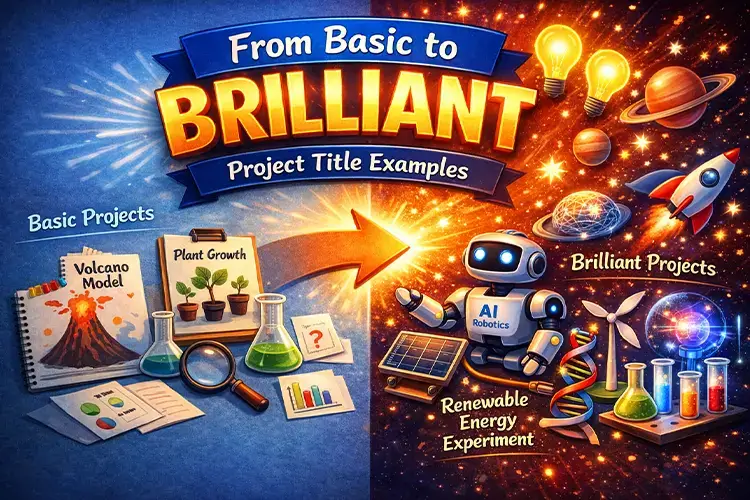
From Basic to Brilliant: Project Title Examples
From Basic to Brilliant: Strong Project Title Examples with Explanations | Weak Project Title/Question | Strong Project Title/Question | Why Strong |
| “Plants and Growth” | “How Does Fertilizer Affect the Growth of Tomato Plants?” | Specific, testable, shows independent and dependent variables. |
| “Ice Melting” | “Does Saltwater Slow Down the Melting Rate of Ice Cubes Compared to Freshwater?” | Clear science fair hypothesis, measurable results, and focus on one factor. |
| “Baking Soda Experiments” | “How Does the Amount of Baking Soda Affect the Rise of Homemade Dough?” | Testable, precise, and includes what is being measured. |
| “Music and Plants” | “Do Different Types of Music Affect the Growth Rate of Sunflower Plants?” | Specific, measurable, and engaging question. |
How to Choose: The 3-Filter Method
There are many student who want to know how to choose a science fair project, so, it is easier to select the appropriate science fair project in a three-step filter method:
Filter 1: Your Grade & Skills
Take into account your grade and skill level in order to choose a project. The classification of projects as Easy, Medium, or Hard will guarantee that the experiment is at the same level as your experience and frustration is avoided.
Filter 2: Your Available Resources
Assess the available time, financial resources, material resources, and adult assistance. Choosing a project based on the resources you have will guarantee the ability to finish the project well and without needless stress.
Filter 3: Your Genuine Interest
Choose a science fair topics that you find interesting. Passion will give you the drive to work on the project especially if it is a long experiment and in most cases, it will lead to increased creativity, concentration, and success.
Science Fair Project Ideas: Organized by Subject & Testable Question
Science project ideas are an excellent opportunity for experimenting with curiosity in various areas. The following is a list of the projects in subject order, and each idea is presented in the form of a testable question, a short description, and difficulty and core concept tags.
Life Science & Biology Projects
Life sciences are the study of living things and how they live as well as how they interact with the environment. They may be experiments with plants, microorganisms or small animals and may be used to explain some important biological principles, such as growth, adaptation and physiology. Here are some examples of biology science fair projects:
Example 1:
Does Light Color Affect Algae Growth and Photosynthesis? | Does light colour have any influence on algae growth? The following can be done to grow algae under red, blue, and green light, and observe which color gives the most growth and photosynthesis. |
Example 2:
Which Common Kitchen Spices Are Most Effective Against Bacterial Growth? | Which are the most effective antibacterial spices that are used in the kitchen? When using such test spices as garlic, cinnamon, and turmeric, compare them with bacterial cultures to identify the most efficient ones. |
Example 3:
How Does Sugar Availability Affect the Foraging Behavior of Ants? | What is the impact of having sugar on the foraging behaviour of the ants? When offered sugar and plain water, ant trails and food collection are observed. |
Chemistry & Material Science Projects
Chemistry science fair projects and material science examine substances, reactions of substances, and material characteristics. Experiments may be of daily life objects, and also the development of new materials or the alterations in chemicals. These projects are used to show concepts such as reactivity, pH, crystallization, and material strength.
Example 1:
How Does the pH of Household Liquids Affect the Rate of Iron Nail Corrosion? | How pH of various household liquids influence the rate of corrosion of iron nails? Get nails in vinegar, soda and water and observe the rust formation. |
Example 2:
Which Substance Forms the Best Crystals: Salt, Sugar, or Borax? | Which makes the greatest or the best crystals salt, sugar or borax? Grow crystals out of each material under controlled condition and their size and structure are measured. |
Example 3:
Are Natural Cleaners as Effective as Chemical Cleaners for Stain Removal? | Are natural cleaners (lemon juice, baking soda) effective for stain removal as chemical cleaners? The effectiveness is checked by applying all cleaning agents to the same surfaces, followed by an evaluation of stain removal. |
Physics, Engineering & Energy Projects
Physics science fair projects and engineering projects are the study of forces, motion, energy, and the design of functional systems. Such experiments may be model-building, efficiency testing, physical property testing, and so on, and allow students to learn concepts such as aerodynamics, energy transfer, structural integrity, and more.
Example 1:
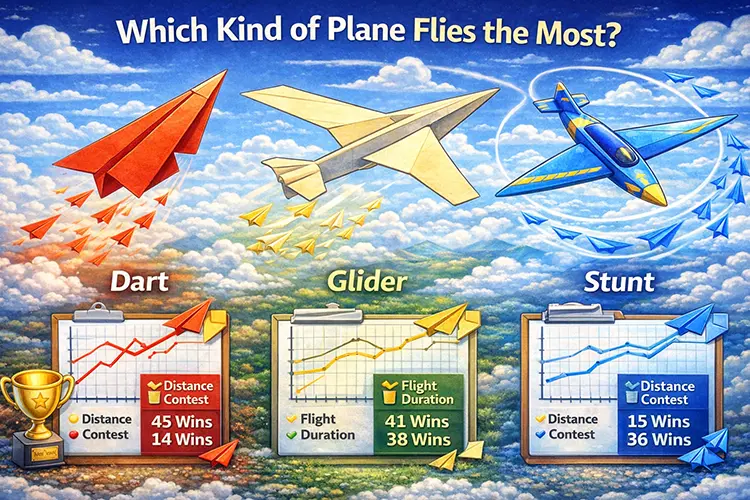
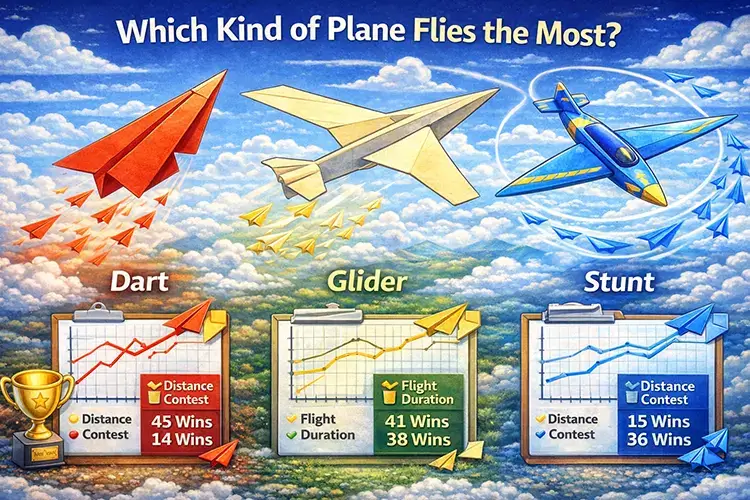
Which Paper Airplane Design Flies the Farthest: Dart, Glider, or Stunt Plane? | Which kind of plane flies the most: dart plane, glider plane or stunt plane? You can pick among a variety of paper airplanes, attempt to toss some of them with the greatest distance and distance, and watch which one you can get to fly the farthest; the finest is the aerodynamic design of the plane. |
Example 2:
Which Household Material Retains Heat Best: Foam, Cloth, or Aluminum? | How well do the varieties of household materials (foam, cloth, aluminum) retain the warmth of water? Cover the same containers with every material and then check the temperature changes over time. |
Example 3:
Which Bridge Design Supports the Most Weight: Beam, Truss, or Arch? | What is the weight that a beam, truss or arch bridge can support before collapsing? Make plain popsicle sticks or cardboard bridges and add weights to the bridge in small increments in order to discover its capacity to hold. |
Earth & Environmental Science Projects
Earth and environmental science fair projects study the natural systems, resources of the planet, and the effects of the human activity. Experiments may entail testing the water or soil quality, simulating the erosion, or examining plants in response to the alteration of the environment. These projects bring out sustainability, ecology and earth processes.
Example 1:
How Do Different Ground Covers Affect Soil Erosion on Slopes? | How would the soil erosion be different on grass slopes, mulch or bare soil? Use the small soil models in order to simulate rainfall so as to observe which surface keeps the greatest amount of soil. |
Example 2:
How Does Air Pollution Affect Seed Germination and Early Plant Growth? | How does exposure to air pollution influence the germination of seeds and plant growth? Plant seeds in conditions of different amounts of smoke or dust and determine the rates of germination and growth. |
Example 3:
Which Composting Method Produces Finished Compost the Fastest: Hot, Cold, or Vermicomposting? | What is the fastest method of composting (hot, cold, vermicomposting) to use? Follow the work of organic matter decomposition as time passes in order to determine which method yields finished compost the quickest. |
Computer Science & AI Projects
AI projects, computer science fair projects, and other projects in computer science look into programming, algorithms, and artificial intelligence in solving problems. The experiments that usually lead to the development of software, simulations, or models capable of performing data processing, pattern recognition, and prediction-making are, at the same time, revealing the skills of computational thinking and problem-solving as the very basis of their creation.
Example 1:
Which Sorting Algorithm Is Most Efficient for Large Data Sets: Bubble, Insertion, or Quicksort? | What sorting (bubble, insertion, quicksort) algorithm is the most efficient at sorting large data sets? Apply every algorithm and time on successively larger arrays of data. |
Example 2:
Can a Simple Program Predict Future Traffic Patterns Using Past Data? | Can a simple program forecast the future traffic using the past vehicle records? Apply simulated data of traffic flows to make prediction of congestion and compare the results with actually recorded data. |
Example 3:
How Secure Are Simple Encryption Methods: Caesar Cipher vs. Substitution Cipher? | How useful is an encryption that is not elaborate (Caesar cipher vs substitution cipher) in maintaining the security of messages? Coder and make attempts to decode coded messages to measure the relative complexity of breaking each technique. |
From Idea to Execution: Your Project Action Plan
A good science fair project does not occur out of thin air but rather its product of planning. Here are the concrete steps that need to be worked upon to convert the idea into an experiment and then to transform this experiment into a sophisticated piece that can finally be dignified through presentation of results.
Phase 1: Research & Hypothesis (Week 1-2)
Know the science behind your thought before picking up a test tube or planting a seed.
- Collect Data: Visit check books, scholarly articles, and websites. Record the previous experiments and findings to assist in defining your strategy.
- Ask Questions: What’s unknown? The question to test would be?
- Develop a Hypothesis: Guess what will occur with the help of the If-then-because formula.
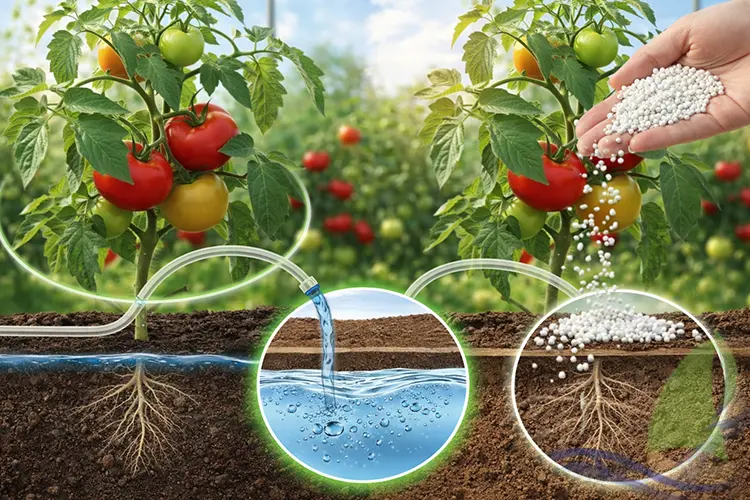
Example: When I sprinkle tomato plants with sugar water as compared to plain water, then they will grow faster because the sugar will provide them with more energy that will provide them with the extra nutrients.
Phase 2: Experimental Design (Week 3)
You now form a testable experiment of your hypothesis.
Identify Variables:
- Independent Variable: The variable that you change (for instance, kind of water).
- Dependent Variable: The process that you are measuring (for example, growth of the plant).
- Controlled Variables: All other things that you hold constant (light, soil, pot size).
- Plan Your Procedure: Prepare detailed instructions (step by step) in order to get someone else to do what you did again.
Worksheet: Experimental Design Worksheet
Phase 3: Display & Presentation (Final Week)
The way you demonstrate to the judges what you did and why is in your board and explanation.
- Strategy on the Board: Problem, Hypothesis, Procedure, Data, and Conclusion. Lead by the title and visuals.
- Create Great Charts: Label the axes, specify the units, and make a legend. Create charts that are clear and easy to understand.
- Rehearse Your Presentation: Steps to preparing a 60-second overview of your research. Don't only share what you have tested and discovered, but also the significance of it.
Conclusion
As well as being an example of science and creativity, an excellent science fair project is also a demonstration of critical thinking. Students, through the choice of a testable question, the formulation of a clear science fair hypothesis, and the meticulous planning of an experiment, will get to interact with the significant concepts of various fields. The feeling of exploring and the skills obtained through the experience will enable them to think out of the box like the one coming up with problems and solutions in the real world.