KEY HIGHLIGHTS:
- This guide provides 200+ narrative essay ideas for 2026 to help students write emotionally engaging and authentic stories based on real-life experiences.
- A strong narrative essay focuses on meaning, personal growth, and reflection, not just a sequence of events.
- Effective storytelling includes genuine emotions, clear narrative structure, sensory details, and reflective insight showing how the experience impacted the writer.
- The guide explains how to choose the right narrative essay topic by prioritizing personal relevance, audience awareness, originality, and assignment requirements.
- Narrative essay prompts are organized into clear themes such as personal growth, childhood memories, education, travel, relationships, fears, humor, social issues, creativity, and work experiences.
- Grade-level recommendations help middle school, high school, and college students select topics appropriate for their academic and developmental level.
- Common narrative writing mistakes - such as choosing vague topics, lacking emotional depth, telling instead of showing, and weak reflection - are clearly highlighted to improve writing quality.
Imagine a situation where you have to transform your own experience into an interesting narrative that is emotionally resonant, reflective, and significant. To write a story that is interesting in terms of the plot, the first step is to find the best topic. Access 200+ original and challenging narrative essay ideas that encourage creativity, applicable to current life in the modern era. These prompts will make you develop an authentic story and share more about yourself, regardless of whether you are reflecting on personal development, unforeseen difficulties, relations, or defining moments. Its collection is bound to make you get out of writer's frustration, discover your voice, and make your essays striking and appeal to your readers, and underline what you have learnt on the basis of real-life experience.
What Makes a Great Narrative Essay?
Good narrative essay is not merely the story, it is an invitation, and a pleasant experience to the reader. The good narrative essay ideas capture the personal experiences as interesting stories in order to share meaning, development, and direction, and it does this with structure, emotion, and reflection without distorting clarity and genuine meaning with the aid of the essay.
Key Elements of Powerful Storytelling
Strong narration depends on the emotional richness, form, and content. These are aspects that make the readers relate to the experience that the writer went through, track the journey with ease, and realize the importance of the story beyond the incidents.
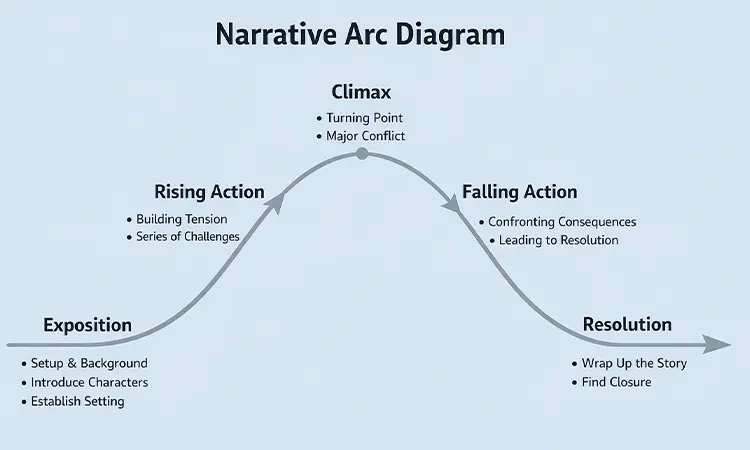
- An effective narrative essay topic ideas is one that is authentic due to its basis in real life. To make the narration memorable and effective, writers are advised to be ready to reveal real emotions so that the reader will be more ready to sell, relate and be engaged.
- A good story is the story that follows a logical flow and the reader goes through the experience. It has a clear beginning, climax and denouement.
- The imagery employed helps a reader imagine the scenes and become involved into the story. The story is more interesting and appealing to senses through the appeal to senses such as sight, sound, touch, taste and smell.
- Reflection provides the story with motivation other than entertainment. Offering both an explanation of what you learned and how you changed will assist readers in gaining a sense of the importance of the experience and will make the story relevant to the greater learning of life.
How to Choose the Right Idea for You
The selection of the appropriate good narrative essay ideas will guarantee verisimilitude and coherence. Optimal subjects are those that are relevant to personal experience, among other things, as well as those that meet the expectations of the audience and the requirements of the assignment, and in which the writer can express the personal voice.

- Good narrative essay ideas are based on stories that you are interested in. Writing becomes easy with topics that are emotionally significant, as it adds an edge to the writing experience. By following this, the writer can be more honest with the process of writing.
- Tone, detail and emphasis can be influenced by the fact that the reader of your essay is known. The writing in academics is not a copy of that is meant to be an inspiring or entertaining piece and therefore, there is a need to abide by the expectations.
- A wonderful story must still be done in accordance with the theme, length, and learning objectives standards. One should ensure that the ideas for a narrative essay selected is able to fulfill these requirements to ensure that it is clear, relevant, and stands the highest chance of winning through the evaluation criteria.
- Your story is unique because of the extraordinary events. By paying more attention to personal point of view than dramatic incidents, originality is created, and the readers would feel that they are related to your voice and point of view in a significant way.
Facing difficulty crafting a narrative essay? Our expert writers will not only help you choose a perfect topic but also write the complete paper for you. Hire our professional narrative essay writers to craft a compelling story that captures the shades of your personal experience.
Personal Growth & Life-Changing Moments
Personal growth narratives portray the turning points that silently transform us into what we are. This section talks about personal narrative essay ideas that has radical moments, difficult and eye opening, that have snuck beyond your comfort zone, cemented your personality, and made an irreversible mark on the direction of your life.
Overcoming Challenges
These notions are based on the moments when life has given you a blow, and you are far out of your comfort zone, and you have to survive, support yourself, and stay in the confrontation with the life challenges and moments that define your life.
- How did a period of isolation has changed my relationship with myself?
- What were the effects of being rejected again and again?
- How emotion impact you when you choose growth over comfort?
- What I learned about trust and patience from starting over?
- What crisis has exposed my emotional strengths?
- Did I trade comfort in long-term development?
- How was I able to adjust to something different I had no control over?
- What had been the greatest restraint?
- Why was it necessary to release what dream did I?
- What have been my perceived limits?
Lessons Learned
These personal narrative essay ideas focus on situations of realization and observation of the real-life that has changed your thoughts and values to shape your personality.
- What has changed my definition of success?
- What was it that I studied too late, but never forgot?
- What discussion has transformed my world?
- Where was patience the mightier than action?
- What made listening be more than speaking?
- How forgiving without closure made me free?
- What pain was an indication of expansion and not defeat?
- What was the benefit of slowing down to enhance my clarity?
- What difficult choice demonstrated what is really important to me?
- When did I get to know that urgency is not always required?
Childhood & Family Memories
Memories of childhood and family are strong sources of personal narrative essay ideas that is meaningful. They unveil infantile emotions, values, and relationships that define identity in the long term. The discussion of such experiences aids in discovering defining events, family dynamics, and information that has remained influential in your thoughts, behavior, and personal identity.
Early Childhood
The initial impressions, explorations and fallacies of the world are what we are likely to record in our early childhood memories. These are sensuous episodes, naive ones, and they are excellent personal narrative essay ideas, themes of retrospective narration that can be used to wonder just how much can be done with such minor details.
- Your most beloved child memory and why it stayed with you
- A family tradition you experienced as a child and how it made you feel
- The history of your favorite childhood item or comforter.
- An experience of chaos when you lose and your learning in the process.
- Your first school memory and its influence on your attitude toward learning.
- A childhood fear that you successfully overcome.
- One of the times that you felt especially safe or secure.
- One of the first things that you learnt the hard way.
- A childhood magical or special place.
- An event that recalls food, smell, or a sound that you still recall vividly.
Family Dynamics
The family structures determine our communication, resolving conflicts and even love. Providing the ideas of a narrative essay on such relationships, you can talk about the elements of growth, tension, funny moments, and change, and think about how you and your family members communicated and created your personality and vision of the world.
- From one generation to another, a family tale.
- The time you found out that your parents are also human.
- Sibling rivalry/bond that characterized your childhood.
- The way the cultural background of your family affected your identity.
- Something that happened in a conflict altered the family communication.
- Something in your family you had questions about or defied.
- Someone in your family who influenced your values highly.
- A time your family came together during a difficult moment
- A tradition your family stopped and how that made you feel
- A moment when you felt proud to be part of your family
School and Educational Experiences
School and other school experiences are normally marked by major growth stages, struggle and self realization. Academic challenges to social achievements, these memories demonstrate a sensitive and effective role of learning settings in building confidence, values, relationships, and long-range objectives.
Academic Journey
The educational process shows the intellectual development, educational discipline, and shifting attitudes to learning. Getting ideas for a narrative essay and then telling stories on these experiences will help investigate how you got motivated, how you persevered, and what experiences redefined your perception of success, failure, and your own potential.
- When did you learn that learning was fun?
- What did a difficult topic do to your studying or thinking?
- When did you doubt your academic capacity?
- When did you find hard work to be rewarded in your studies?
- What is the effect of teacher feedback on your confidence?
- What has been your most uncomfortable assignment?
- When did you realize the importance of discipline and consistency in school?
- What impact has competition in academics had on your mind?
- What was a goal in academics that was impossible and turned out to be possible?
- What did your definition of the term success change throughout your school years?
Social Experiences
School social experiences influence communication competence, identity, and belonging. Such instances are usually marked with friendships, disagreements, and self-understanding, and provide significant knowledge of how you were taught to handle relationships and social norms. Take a look at some good narrative essay ideas based on social experiences.
- When did you ever feel that you were at home in school?
- What did a communication misconception with a peer teach you about communication?
- When did you realize the social difference among students?
- How did you learn to fight for yourself in school?
- When did you understand the importance of selecting the right friends?
- What role did an incidence of exclusion play in your confidence?
- What was a social rule that you found difficult to grasp or accept?
- When did you learn to balance fitting in with being yourself?
- How did the teamwork at school impact your social skills?
- Which school experience made you empathetic towards others?
Travel and Cultural Experiences.
The Cultures and traveling situations open up the broad perspective of thought because you are out of your comfort zone to unfamiliar and stressful environments, which makes you self-conscious. These periods tend to blend adventure, uneasiness, and exploration, and are therefore perfect for in the contemplative stories of development, adaptability, and bonding outside the known environment.
Adventure Stories
The stories of adventure travel revolve around traveling, danger, and exploration, the instances when the new territories challenged independence and offered new strengths or insights.
- When did traveling take you out of your comfort zone?
- What did you learn about moving to a new city?
- Which unexpected road incident taught you to be self-reliant?
- When did a travel fail, but it led to a better experience?
- What impacted the decision-making process due to being alone in a new place?
- What was the point when you felt lost and free in the course of traveling?
- What impact has traveling had on your uncertainty management?
- Did a travel teach you something you could not learn at home?
Cultural Encounters
Cultural experiences reveal the instances of contact, distinction, and realization, demonstrating how identity and compassion are reconstructed by exposure to new customs and worldviews.
- When did you first learn that cultural norms differed significantly from your own?
- How did observing daily life in another culture change your assumptions?
- What was the interaction that helped you surmount a cultural barrier?
- Were there any cultural traditions that did not conform to your beliefs?
- How did adapting to a new culture test your patience and openness?
- When did you feel more about cultural diversity?
- How did returning home change the way you viewed your own culture?
Relationships & Friendship
Friendships and relations affect emotional growth, empathy, and self-awareness. With such relations in mind, it is safe to say how trust, conflict, support, and change can influence the development of a person and how you can get to know yourself and other people as time goes by.
Friendship Stories
The friendship stories cover the ideas for narrative essay of connection, loyalty, and change, and describe the situations when you reevaluate how you consider trust, companionship, and personal boundaries due to some shared experience or issue.
- When did you realize a friendship was truly important to you?
- How did a disagreement with a friend change the relationship?
- When did a friend support you in a way you didn’t expect?
- In what way did a friendship make you grow emotionally/socially?
- When did you realize that you lost a friendship?
- What has distance or time put to the test of one of your friendships?
- When did you learn the distinction between a casual and a true friendship?
- What role did a friend play in making a big decision in your life?
Family Relationships
The ideas for narrative essay are concerned with the family relationship perception, conflict, and development, and disclose how the changing roles and the history contribute to the establishment of long-lasting relationships and emotional maturity.
- When did your perspective change for one of your family members?
- In what way has a family issue altered your communicative style?
- In what way did the responsibility change your role in the family?
- What was the influence of the advice given by a family member on a big life decision?
- When did you know that your relations with family were changing?
- In what ways were time or distance changing a family relationship?
- What moment changed your perspective on the struggle of a family member?
First Experiences & Milestones
Transition, growth, and self-realization occur in the form of first experiences and milestones. Writing about these ideas for narrative essays assists in capturing the process of responsibility development, independence development, and confidence development through defining firsts that form personal identity.
Coming of Age
Coming-of-age stories revolve around issues where duty, self-sufficiency, or awareness defined the years between childhood and adulthood and the accountability towards themselves.
- When did you become responsible for someone or something other than yourself?
- How did handling a serious responsibility change your priorities?
- When you realized that adulthood involves tough decisions, not just freedom?
- How did the earring trust of people make you feel more mature?
- When did you take note of the effects of personal choices?
- What did one of your mistakes teach you about yourself?
- When did you start considering yourself to be independent?
- When did you realize that childhood was over?
Personal Firsts
Personal firsts showcase acts of bravery and self-expression and document situations in which self-belief, independence, or confidence came into being.
- When did you find out that you could count on yourself?
- What did you learn about being able to speak up against yourself?
- When did you leave your comfort zone in society?
- How did achieving something alone affect your self-image?
- When were you first proud of your own voice/opinion?
- What was the first success that made you go further and take even bigger risks?
- What was your personal first that made you realize your potential?
Overcoming Fears & Challenges
In the event of surmounting fears and difficulties, inner strength, inner resilience and inner growth have been achieved. These experiences demonstrate the moments when you felt awkward, unlucky, or unconfident and had to change, adapt, and discover your emotional and intellectual limitations.
Personal Fears
Fear stories entail the inner struggle, in which they show how they got to confront their fears, anxiety, self-doubt, or vulnerability, how they got to be confident, brave, and emotionally mature.
- When did you know you were being held back by fear?
- What did the experience of confronting a fear do to your view of yourself?
- When did unease mark your development?
- What was the experience with stepping into vulnerability that gave you confidence?
- When did fear become motivation and not a hindrance?
- What was the response when you initially experienced a significant fear?
- Then, when did you know that being courageous does not imply being without fear?
- And what was that time of learning that you could learn to handle fear rather than get rid of it?
External Challenges
External challenge stories revolve around challenging situations that one cannot control and emphasize the lessons learned to be resilient, adaptable, and through crisis, responsibility, or serving others.
- When have you been put to the test by an unforeseen crisis?
- What was that tricky circumstance that made you be quick to adapt?
- In what situation does responsibility prevail over fear in trying a difficult situation?
- What was the experience of assisting someone in a difficult situation?
- When did misfortune shift your priorities in life?
- What did a physical or emotional difficulty do to your way of thinking?
- What was the problem that taught you the lesson about patience and endurance?
Humorous & Lighthearted Stories
Light and comedic tales glorify faultiness, errors, and all the chaos of life. These narrative essay topic ideas employ humor to help think about how to grow, be humble, and learn through laughing at yourself to acquire valuable lessons.
Funny Mishaps
From comic misfortune, funny stories underline the unforeseen mistakes and miscalculations, and transform the clumsy or anarchic into humorous stories with a sense of humor and reflection.
- How did such an innocent error become a legend?
- Why did embarrassment turn out to be something to laugh at?
- In what situations does confidence backfire in a counterproductive manner?
- What can make a plan go down in a more dramatic way?
- In which case did miscommunication result in something funny?
- What was wrong about responding too rapidly?
- When did everything go wrong at the worst possible time?
- What is the error that you learnt not to take yourself too seriously?
Childhood Humor
Humorous stories based on childhood are centered on innocence, fantasy, and misconceptions, and show how the reasoning and beliefs of youthful beings were frequently used unintentionally to produce comic moments. Get some funny narrative essay topic ideas of childhood.
- In what way does your childhood belief make you laugh?
- When did your imagination get you into trouble when it was not really so?
- What was funny about the failure of a childhood plan?
- In what ways did you misinterpret something at a very young age?
- What was a memorable moment that was caused by a family response?
- When did your inquisitiveness cause comic disturbance?
- What was the childhood event that your family is still laughing about?
Social Issues & Community
Awareness, responsibility, and empathy are developed through social and community experiences. When one writes about such narrative essay ideas, one will see the influence of exposure to more significant matters and collective action on values and beliefs, as well as personal identity.
Social Awareness
The stories about social awareness deal with the instances of realization, illustrating how exposure to injustice, inequality, or service changed the perception of society and individual responsibility.
- When do you first realize there was a problem around you?
- What is it that made you different as a result of seeing injustice?
- When do you consider silence to be complicity to you?
- What were the implications of being involved in community action on your beliefs?
- When did you feel that you had to defend other people?
- In what ways did you think about a social issue that was against your expectations?
- When did you start taking action on empathy?
- When does the social responsibility become personal?
Cultural Identity
The cultural identity narratives are about belonging and conflict, whereby there are cases where heritage, expectations, or even discrimination influenced self-understanding and values.
- When did you start doubting your cultural identity?
- What was the experience of having to balance various cultural expectations?
- When have you been between two worlds?
- What was the role of an exclusion experience in your self-awareness?
- In what cases did your community values play a role in a big decision?
- What was the effect of the experience of being biased on your view of society?
- What was the experience that allowed you to be more open to your cultural background?
Creative & Imaginative Prompts
Imaginative and fictional narrative essay ideas facilitate creative and self-expressive thinking. They get authors to think outside the box and merge contemplation with fantasy so as to discover insights, feelings, and thoughts that ordinary stories can miss.
"What If" Scenarios
What if? Speculations stretch the limits of imagination by questioning other possibilities, hypothetical decisions, and hypothetical outcomes that expose values, fears, dreams, and suppressed desires.
- What would be different had you found yourself going through one ordinary day differently?
- What would change in your life once you stop being afraid?
- How do you make decisions when everything will turn out alright?
- What would you do in a momentary cessation of time?
- What do you think would be the result of having a whole new identity?
- What would be your priorities with no consideration of money?
- What reality would you find out had you been able to read minds one day?
- What would you do differently when you really believed in yourself?
Object-Based Stories
Object-based stories apply physical objects for fictional narrative essay ideas as a symbolic meaning and reveal memories, emotions, and meaning based on the history, presence, or loss of ordinary or valued objects.
- What do you have in your life that has a story, of which no other is aware?
- What brought about the emotional attachment to you of an ordinary item?
- What comes to mind when you look at a particular object?
- What was the change in meaning of an object over time?
- What is the turning point in your life that is a possession?
- How did the loss or giving away of something get you?
- Which item is the most representative of who you were before and the present?
Seasonal & Holiday Stories
Seasonal and holiday stories explore the impact of time, celebration, and change on perspective, relationships, and individual development, as well as emotional swings, tradition, and memoirs.
Holiday Memories
The memories of a holiday refer to tradition, anticipation, and emotional aspects, and tend to show a more intense meaning behind celebration and unity.
- How did a family party alter your perception of family?
- What did an unplanned holiday experience make memorable?
- When in your life did a tradition become more significant to you?
- What was the valuable lesson learned during a disappointing holiday?
- When did you find out there was something deeper about a celebration?
Seasonal Changes
The stories of seasonal change involve the concept of time and nature to indicate emotional development, transition, and self-transformation.
- What is your mood during a certain time of the year?
- What was a turning point season in your life?
- What has been the influence of the traditions of your seasons on your sense of belonging?
- Was a change in season reflected in a personal change?
- In what ways has nature made you comprehend growth or loss?
Professional & Work Experiences
The administrative and occupational life brings out the sense of responsibility, identification, and development, through which the lessons acquired over the challenges are revealed in relationships and moments that define the career.
Career Moments
The career moments are concerned with learning, failure, and development in critical professional shifts and roles. Get some narrative essay ideas from career moments.
- When did work failure remake your work ethic?
- How did early career expectations differ from reality?
- When did feedback make you alter your approach to work?
- How did quitting a job assist in making your objectives clearer?
- When did you feel really competent in your profession?
Work Relationships
Work Relationship fiction is the genre that deals with teamwork, disputes, and bonding in the workplace.
- When do you find teamwork a challenge to effective communication?
- How did conflict in the workplace enhance your emotional intelligence?
- When did working with differences lead to growth?
- What was the development of trust in a professional relationship?
- When did a mutual purpose reinforce work-based relationships?
Specific Recommendations at Grade Level.
Prompts in writing should develop as a student matures in age. Recommendations of narrative essay ideas at the grade level are such that the topics are simple to relate to, but as the students advance in their academic and emotional states, it is through these topics that they develop deeper reflections, critical thinking, and personal analysis.
Grade-Level Writing Prompts
Grade-Level Narrative Essay Prompts for Middle School, High School, and College Students | Grade Level/ S.no | Middle School (Grades 6–8) | High School (Grades 9–12) | College Level |
| 1. | How did a family rule affect you? | How did failure change your goals? | How did culture shift your thinking? |
| 2. | When did helping someone feel rewarding? | When did peer pressure test you? | When did academics reshape priorities? |
| 3. | How did a mistake lead to learning? | When did expectations feel heavy? | How did work affect career goals? |
| 4. | When did you feel brave? | How did a relationship change you? | When did failure lead to growth? |
| 5. | When did honesty matter most? | When did you make a hard choice? | When did ethics affect decisions? |
| 6. | How did a friendship help you? | How did a setback refocus you? | How did teamwork shape leadership? |
| 7. | How did an adult guide you? | When did independence matter most? | How has education changed you? |
Common Mistakes to Avoid
Most stories are unsuccessful not due to the lack of writing abilities, but some can be successful owing to preventable structural and conceptual errors. Knowing pitfalls provides writers with an opportunity to select better narrative essay topic ideas, develop interesting stories, and communicate the meaning in a more efficient and effective way.
Topic Selection Pitfalls
Mistakes in topic selection usually undermine stories even before one starts the writing process, resulting in unfocused stories, poor emotional appeal, and a lack of personal insight and originality.
- It is hard to construct a focused narrative when the topics that are chosen are too broad or vague. Whenever a story attempts to encompass too much, vital information is lost and the message is not brought out. The reduced scope permits the depth, clarity, and deep emotional connection.
- The choice of stories that lack significance to the writer is likely to lead to flat writing. Provided that the experience was not something profound to you, it is not going to appeal to readers. The presence of meaningful stories will automatically result in more reflection and authenticity.
- Choosing too generic subjects without a point of difference might render your storyline boring. The mainstream themes require a personal understanding, details, or a surprising revelation to be unique and original.
- They are not ready to acknowledge the emotional essence of the story, which makes it weak. Situations are not sufficient; the readers relate on the basis of emotions, responses, and personal change that provide meaning to the story.
Narrative Writing Errors
Poor description, lack of reflection or rushing narration are actually the common errors of narrative writing and reduce the role of involvement and give further insight.
- It is not revealing but telling, which deprives the reader of their experience. This is done by doing things, talking, and imagining, which contribute to the story being vivid and immersive and not explanatory.
- Realism is confined by the forgetting of sensory details. Fantasies about views, hearing, touch, and feeling will give the reader a complete picture of the situation.
- The fact that one fails to reflect would make the story incomplete. Powerful stories describe why the experience was significant and the way it influenced the writer.
- Hurrying up the resolution does not allow closure. Giving one space to insight is the only way the story would conclude with significance instead of being abruptly cut in mid-course.
Conclusion
Conclusively, a good narrative essay is based on the ability to choose a topic that is not only personally significant but also touching to the heart. With the help of such issues as form, descriptive specifics, and thoughtful commentary, authors are able to produce narratives that appeal to the audience. The variety of topics and age-related recommendations offered in the guide make writers on different levels authoritative to share their personal experience. Quite on the contrary, it is better to avoid typical pitfalls so that the story is clear and deep. Finally, a good story does not only entertain but also teaches one much about their development and the world, so it can be seen as a valuable addition to the world of writing.