How Long is 750 Words? Page Count Explained
Discover how many pages 750 words equal in various formats. Learn how spacing, fonts, and margins affect essay length in this complete guide.
Nov 04, 2025
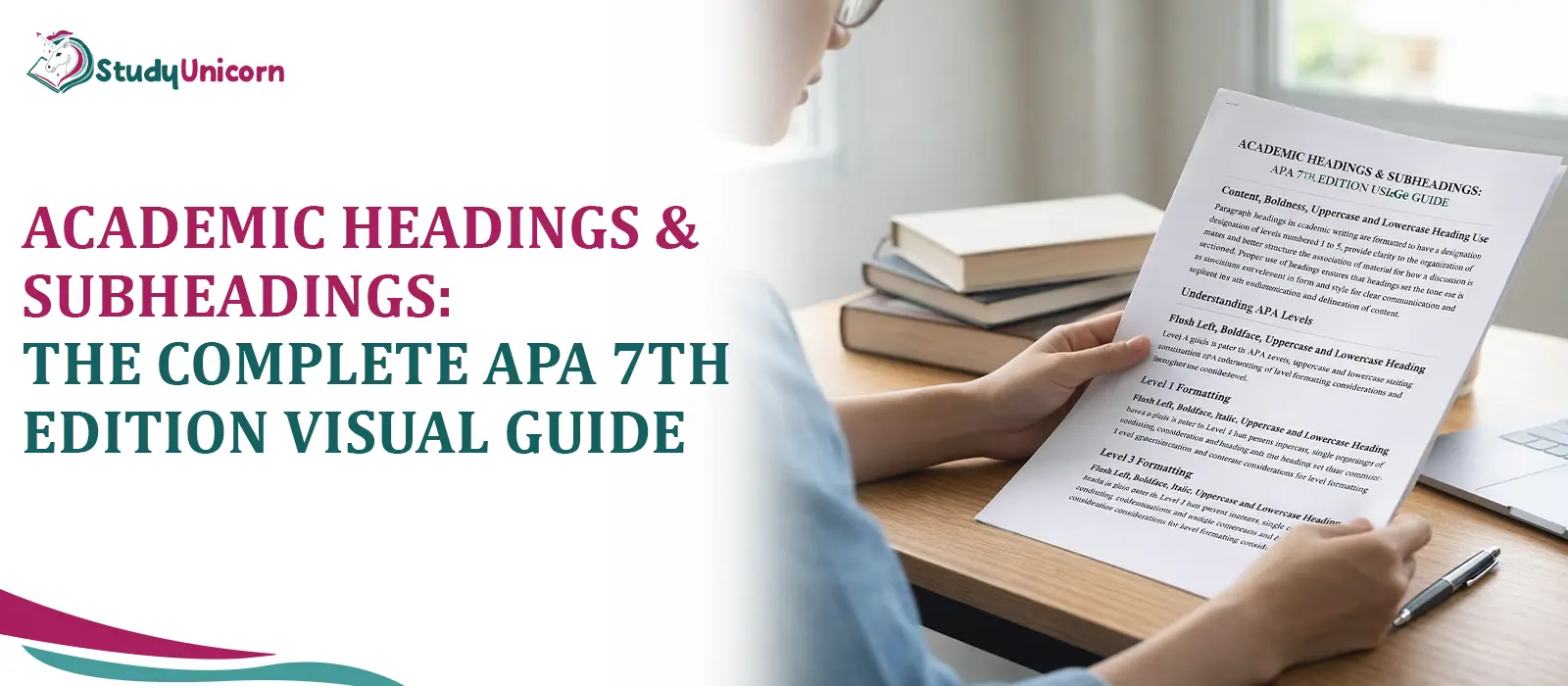
Academic writing requires clear organization and headings are important to act as a guide to the reader in your ideas. The paper is logically presented in APA Style, and its structure is logically divided into headings and subheadings, allowing the reader to read and comprehend the information in a complex structure with ease and to move about. The APA 7th Edition has also introduced a few rules of formatting and five levels of headings that enable a writer to present his research work in a definite order. Nevertheless, a great number of students and researchers are unable to recall when and how to use each of the levels correctly.
This visual aid makes it easier as it gives the objective of APA headings, illustrates the five levels using clear examples and how it should appear in a correctly formatted paper. You may be preparing a research paper, thesis or literature review but knowing APA headings will enable you to better organize your work, and clearly explain your ideas in a professional manner.
Academic writing headings are mostly regarded as mere format features, yet their purpose extends much more than the looks. Headings of the papers composed in the APA Style contribute to the establishment of a coherent structure that makes ideas organized, leads the reader through the paper, and presents the research in a professional way.
Provided that the headings are properly used and the recommendations of the Publication Manual of apa 7th edition headings are followed, a long block of text turns into a well-organized document that is more readable and comprehensible. They are indicators of the changes in the subject, emphasize important parts of your research, and enable the reader to understand the course of your argument very fast.
Read our guide on Mastering Academic Research & Formatting for a better understanding of research organization and formatting.
Headings separate the meaningful sections and subsections of your paper. They do not use one continuous text to convey information, but construct a rational sequence of ideas. This assists the writer and the reader in the manner the various sections of the paper are related to one another.
The academic papers are hardly read by the readers in their entirety. Headings serve as guideposts, which lets them find the sections of the research, like methods, results, or discussions, quite fast. The skimming, reviewing and revisiting of essential details become easy through clear headings.
Properly arranged headings make your paper look well and professional. They demonstrate that the writer is familiar with the rules of academia and adheres to standard formatting rules.
Go through our Avoiding Plagiarism guide to ensure that your research writing follows ethical standards and for some tips on maintaining academic integrity.
Outline structure should be closely reflected in the structure of your paper by the use of headings. When you are writing your research or essay, you usually divide your thoughts into key points and supporting ideas. These key subjects typically form Level 1 headings of a paper written in APA Style, with lesser ideas being elaborated with apa subheadings of lesser levels. This strategy makes sure that your strategies and final draft are consistent. This is done by matching headings with your outline and this way, you ensure that you have a logical order of ideas which makes your paper easy to follow and comprehend by your readers.
For a step-by-step explanation of how to organize major sections and present your research plan clearly read our Thesis Proposal Structure guide.
Headings in academic writing are useful in creating a good hierarchy of ideas. The APA Style has a well-organized structure of five levels of headings which are used to organize the paper sections and subsections. These levels formulated in the Publication Manual of the American Psychological Association 7th Edition provided to ensure easy identification of major sections, supporting arguments, and detailed discussions by the readers.
The level also has a given formatting rule, which is concerning the alignment, bolding, italics, and punctuation. The knowledge of these heading levels apa enables writers to organize research papers, essays and reports in a rational and visual way.
| Level | Formatting Rule | Example |
| 1 | Centered, Bold, Title Case | Research Methodology |
| 2 | Flush Left, Bold, Title Case | Data Collection Process |
| 3 | Flush Left, Bold Italic, Title Case | Survey Design |
| 4 | Indented, Bold, Title Case, Ending with a Period. Text continues on the same line. | Participant Selection. The sample included… |
| 5 | Indented, Bold Italic, Title Case, Ending with a Period. Text continues on the same line. | Limitations of Data. The results indicate… |
| Heading Level | Alignment | Font Style | Ending Rule | Usage |
| Level 1 | Centered | Bold, Title Case | No period | Main sections of the paper |
| Level 2 | Flush Left | Bold, Title Case | No period | Subsections of Level 1 |
| Level 3 | Flush Left | Bold Italic, Title Case | No period | Subsections of Level 2 |
| Level 4 | Indented | Bold, Title Case | Ends with a period; text continues | Detailed subsection |
| Level 5 | Indented | Bold Italic, Title Case | Ends with a period; text continues | Most specific subsection |
This hierarchy will help to make your paper easy to understand, follow the logical sequence, and to present it as professional, therefore, readers will find it easier to track your research and arguments.
It is very easy to get lost in the selection of the right apa format headings level, particularly in those cases when there are several sections and subsections in your paper. In APA Style papers, the level of heading contains a strict hierarchy. You can think of your paper as a decision tree and you can quickly decide what level of heading to use. The 7 th Edition of the Publication Manual of the American Psychological Association is used to help guide each part of your paper has a logical place in the rest of your paper.
The following flow-style guide will help you to find out how to use headings in APA and determine the right level of heading.
Yes: Use Level 1 Heading.
Yes: Use Level 2 Heading.
Yes: Use Level 3 Heading.
Yes: Use Level 4 Heading.
Yes: Use Level 5 Heading.
The step-by-step methodology allows keeping the hierarchy of ideas clear so that the readers can understand the structure of your paper easily.
Explore our How to Write an APA Abstract write-up for detailed instructions on summarizing your research properly in APA style.
It is best to remember a few rules that will help you to avoid the most frequent formatting errors and ensure that your paper has a professional academic structure.
These are easy rules to follow and can assist you in producing a well-structured and easily read academic paper.
Small mistakes in the formatting could still be made even in cases where the writers become aware of the fundamental format of the headings. Under the APA Style of formatting papers, headings have to be arranged in a logical hierarchy and uniform format rules. Nevertheless, most learners unwittingly miss some levels, use all types of headings inconsistently, or misuse them in their papers.
The rules provided in the Publication Manual of the American Psychological Association 7 th edition assist in avoiding these problems and keep your paper concise and professional. Learning how to avoid the pitfalls that you see everywhere can serve as a significant way of making your academic writing clearer and better organized.
Heading level omissions are some of the most common errors. As an illustration, moving directly out of Level 1 to Level 3 may interfere with the logical structure of the paper.
How to fix it:
The correct order of headings should always be followed. In case you add Level 3 heading, then this needs to be under Level 2 heading to have a clear structure.
Authors occasionally confuse styles of formatting, as bold type of some headings and plain type of others, or unevenly applying italics.
How to fix it:
Attentively use the precise formatting guidelines to each level of heading; alignment, bold font, italic, and capital preservation ought to be constant in the paper.
It should not have a heading with only one sub-heading. As an example, when there is a single Level 2 heading that is under a Level 1 section, then the use of subsections is nullified.
How to fix it:
Headings should be used not less than two or more subsections under that level.
Level 4 and 5 are paragraph headings and this implies that a heading will have a period at the end and the text will proceed on the same line. A lot of authors are neglecting this rule.
How to fix it:
Do not forget that Level 4 and 5 are a lead-in to the paragraph. The period should always follow the heading and the paragraph should follow it.
The APA level of headings is easier to understand when observed in a complete paper. A properly formatted template has shown how each level of heading can be utilized, both at a large scale (e.g. major sections) and at a small scale (e.g. subsections). You can take hierarchy with this template, observe proper format of these levels of 1 through 5 and implement it on your own papers. The template is based on the frames of the Publication Manual of the American Psychological Association 7th Edition and contains the examples of such typical parts of the paper as introduction, methods, results, and discussion.
Click below to get a fill-in-the-blank APA paper template:
Fill-in-the-blank APA paper template
Where headings follow to divide your paper into sections and subsections, seriation assists to divide information in sections. The APA Style has several differences between a heading and a numbered or a bulleted list. Headings represent the big topics or subtopics, which have content changes whereas seriation separates out detailed points within a paragraph, to make it readable.
As an example, a Level 2 heading could be used to introduce Data Collection Methods; a numbered list under this heading would list particular methods, i.e. surveys, interviews, and observations. Lists that are bulleted or lettered can also be helpful where the order of the items is not hierarchical, but numbered lists imply a sequential or priority order of things.
Combining both headings and seriation is a sure way of creating a well-organized and visually understandable paper. Headings give the reader a rough map of the way to go and lists simplify or break down difficult or elaborate information. This combination is good at making your writing more readable and your writing is professional, short and well organized.
Before you send your paper, you should make sure that your headings are well structured in the apa paper structure format and coherent. Even slight mistakes in the level of heading, alignment or punctuations in APA style can impact the professionalism of your work. A final checklist is used to check these errors and the paper can be sure that it is meeting the guidelines of Publication Manual of the American Psychological Association 7 th Edition.
The APA heading management can be simplified using the modern word processors:
Using this checklist and taking advantage of software tools, you will be guaranteed that your headings are correct, polished, and easily readable to provide your paper with a professional and APA-acceptable appearance.
Learning how to use APA headings is the most important thing to make academic papers organized and professional. One can easily organize his work or her research by knowing the five degrees of headings, rules of hierarchy, and avoiding the pitfalls most writers make. A combination of headings with such tools as seriation and the implementation of checklists or software makes them consistent and readable. In writing a research paper, thesis, or literature review, these APA guidelines in the 7 th edition will assist your work in presenting ideas in a logical way, leading the reader in the right direction, and keeping your work coherent and professional.
APA 7th edition does not demand Level 1 heading as the introduction section. The paper starts with the title at the top, and the introduction readings begin right below them without a heading.
Topics, themes or methods are arranged in these formats in terms of headings. Level 1 headings normally indicate key parts whereas lower level subdivides subtopics enabling readers to quickly scan the structure and find particular sources or discussions.
No. APA Style defines five heading levels. The application of over five levels may mislead the readers and interrupt the hierarchy. Instead, reorganize your material or amalgamate sub points in the existing levels.
Major words (in headings and titles) are capitalized with Title Case. Sentence Case is capitalized on the first word and proper nouns (when mentioning references, figure, and table titles) only. This difference provides the APA formatting consistency.

Sources

Struggling With Assignments?
Get expert-written, plagiarism-free assignments delivered on time.
Place Your Order
Related Posts
How Long is 750 Words? Page Count Explained
Discover how many pages 750 words equal in various formats. Learn how spacing, fonts, and margins affect essay length in this complete guide.
How Many Pages is 1000 Words? (2026 Guide)
Wondering how many pages 1000 words is? Our complete 2026 guide covers word count for single or double-spaced essays in APA, MLA & more.
How Many Pages is 500 Words? 2026 Guide
Discover exactly how many pages 500 words fills in essays. Learn word count for single/double-spaced formatting in APA, MLA styles. Essential student ...
How Many Pages is 250 Words? 2026 Guide
Discover how many pages 250 words fills. Our guide covers single/double spacing, font size, and formatting tips to hit your essay's page count perfect...
Subscribe now!
To our newsletter for latest and best offers

Need Writing Help?
Our expert writers are ready yo assist you with any academic assignment.
Get Started
Join our 10K of happy users
Get original papers written according to your instructions and save time for what matters most.
Order Now