What Can You Do with a Criminal Justice Degree?
Explore 50+ criminal justice degree career paths and salaries for 2026. Find the best jobs in law enforcement, law, corrections, and more
Jun 06, 2026
 $10/page : Save Big on Academic Writing! Order Now Today!
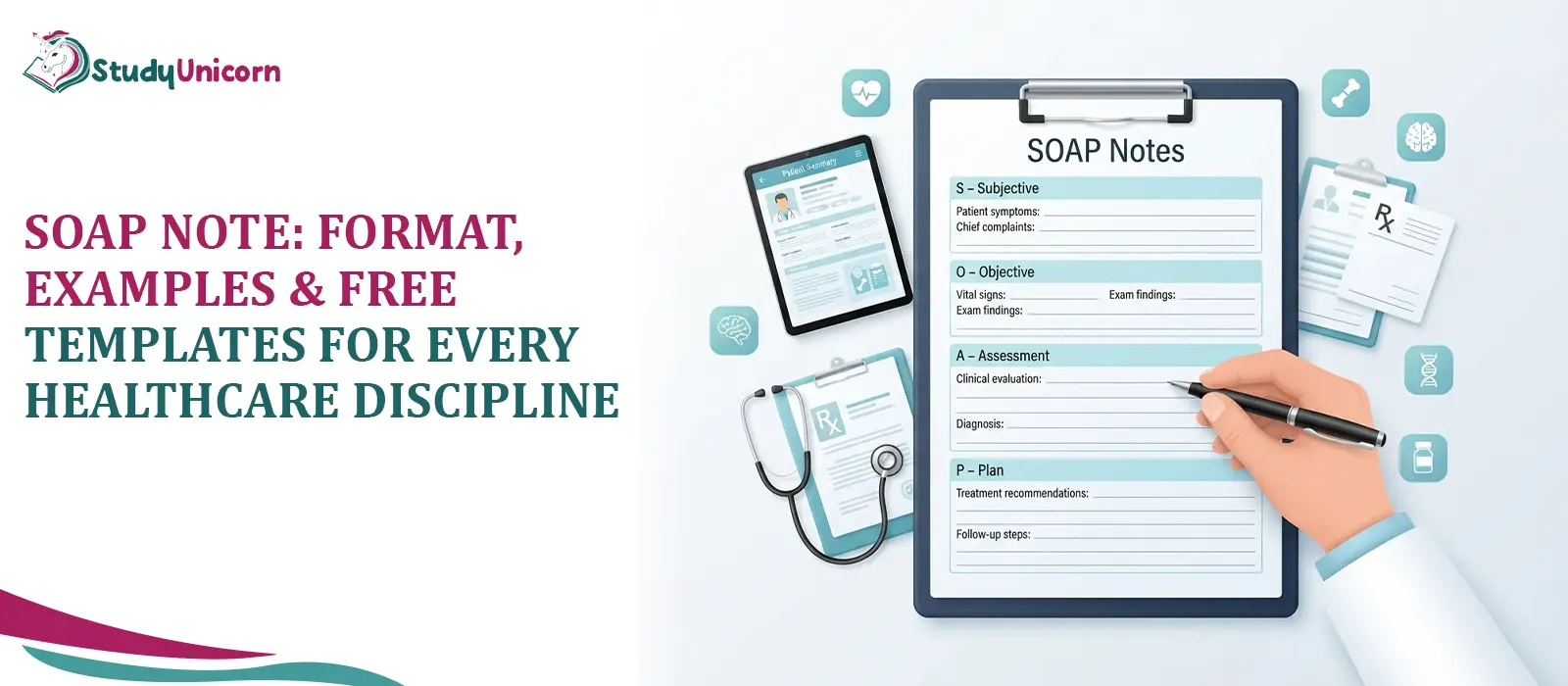
Whether you are writing your first nursing clinical, counseling progress note, or physical therapy case study, the structure of a SOAP note will always be the same. It is a format for organizing your clinical documentation into Subjective, Objective, Assessment, and Plan. It makes sure that your communication is clear and consistent.
This format allows healthcare professionals to distinguish patient data from the measurable facts, clinical judgment, and decisions about future treatment. The below guide provides detailed instructions on how to compose a SOAP note from scratch with examples of seven different kinds of notes.
Need help converting your clinical notes to a full case study or care plan? Then don’t worry; our nursing and health sciences writing experts are here to help.
A SOAP note consists of four parts where information regarding the visit to the clinic of a patient or a client is collected in an organized manner. It is a technique that distinguishes patient reports from observations made by the clinician, his/her subjective opinions, and further actions.
This format of documentation is common in nursing, medicine, physical therapy, occupational therapy, speech-language therapy, counseling, psychiatry, and in other areas related to health. Although details vary depending on the field, all SOAP notes include the same four sections.
The SOAP note format was invented by Dr. Lawrence Weed who proposed the Problem-Oriented Medical Record (POMR). This method was invented by Weed in the 1960s in order to organize records, make them focused on the problems and help to make better clinical decisions. Dr. Weed's concept implied that clinicians had to record their records with regard to patient problems, not to different sources of data. Such innovations included the problem list, the database, the initial plan, and the daily progress notes.
Also, the SOAP note continues to be prevalent due to the structure it provides to all members of the healthcare team when they review patient data. The writing SOAP notes for clinical assignments also facilitates reasoning, continuity of care, communication, education, auditing, and documentation.
In the United Kingdom, Australia, and Canada, in some clinical settings, the term “clinical notes” or “progress notes” may be used instead of “SOAP notes.” The underlying objective of patient documentation is still the same, regardless of what terminology is used.
Soap note meaning is Subjective, Objective, Assessment, and Plan. Each part plays a different role, and ensuring that the information goes into the right part is among the key elements of documentation.
| Letter | Stands For | What Goes Here |
| S | Subjective | The patient’s or client’s reported symptoms, concerns, history, and chief complaint |
| O | Objective | Measurable and observable findings, including vital signs, exam results, tests, and observations |
| A | Assessment | Clinical judgment, diagnosis or differential diagnosis, progress toward goals, and interpretation of findings |
| P | Plan | Interventions, medications, referrals, education, follow-up, and next steps |
Subjective
The Subjective data collection consists of details provided by the patient, client, the person of the patient’s family or a caregiver. They include the main problem, symptoms, pain, the patient’s medical history, medications used and pertinent social history.
When possible, use the patients’ own words to report the main problem, e.g. “I have had a headache for two days”. It is important not to rewrite the patients’ words in their clinical terms: “A patient complained about headache lasting for two days”.
In the case of symptoms and pain, you may use the mnemonic OPQRST (onset, provocation or relief, quality, region or radiation, severity, and duration).
Objective
The Objective section has measurable, observable, and verifiable data. These include vital signs, physical findings, laboratory findings, imaging findings, functional findings, and direct behavioral observations.
Do not write any personal interpretation, opinion, or diagnosis in this section. Rather, include objective data like blood pressure, temperature, heart rate, oxygen saturation level, wound appearance, range of motion, or other test findings.
Assessment
Soap note assessment example portion is the one where the health care practitioner interprets the subjective and objective data. It may contain a diagnosis, differential diagnosis, problem list, treatment response, progress towards the goal, or clinical reasoning.
This part must link the data to a conclusion and not just repeat the data. For instance, the nurse might conclude that the high body temperature and heart rate indicate an infection while the physical therapist would conclude reduced mobility following surgery.
Plan
The plan outlines future steps that can range from medication, testing, consultation, therapeutic intervention, education, future visits, precautions, and goals for the next visit.
For an effective plan, be specific, measureable, and linked to your assessment. You can’t just write “Continue treatment.” What is it, how often, how long, what should the outcome be?
Writing the SOAP note is easier if one sticks to the same order each time. One must begin with what the patient has said, add the objective findings, then interpret it all and end up with a plan.
Practical Writing Tips
The below SOAP note examples contain fictitious and anonymous patient data, for educational purposes. With examples showcase the important features in a specific context of health care or helping profession.
Nursing SOAP notes normally include information on trends in vital signs, drug administration, pain control measures, safety issues, and achievement of objectives of the care plan. The other aspects recorded by nurses include patient teaching and patient response to therapy.
S: The patient complains of a headache of 6 out of 10 and says, “I get dizzy when I stand up.” The patient has also been experiencing poor sleep and poor fluid intake in the last 24 hours.
O: BP 98/62, HR 104 beats per minute, T 37.2°C, RR 18 breaths per minute. The patient looks pale and needs help while changing positions.
A: Possible dehydration and orthostatic dizziness observed in the patient. Increased heart rate along with decreased blood pressure is indicative of continued fluid status observation and fall precautions.
P: Encourage fluid intake as tolerated and document intake and output. Recheck vital signs in 4 hours, ensure fall precautions are in place, give the patient prescribed medications on time, and report to the provider if the dizziness worsens.
The mental health or counseling SOAP notes pay attention to the mood, symptoms, functioning, counseling goals, and risks of the client. Additionally, the clinician records the observable affects and involvement, safety planning, and the process toward the therapeutic goals.
S: The client reports feeling “less overwhelmed than last week” but still struggling with insomnia and low motivation. Also, client does not report any thoughts about self-harm. According to the client, he received help from his family.
O: The client was punctual, made eye contact and engaged actively during the therapy session. Affect was mildly restricted, yet appropriate to the discussion.
A: Client shows slow progress in the development of coping skills and reduction of symptoms of anxiety. Grounding techniques and good sleep schedule seem to be helpful.
P: Continue weekly CBT sessions. Cover grounding techniques, work on a sleep hygiene plan, and evaluate mood, anxiety, and safety during the next visit.
Pain, range of motion, muscle strength, gait, balance, functional mobility, and patient response to treatment can be found in most physical therapy SOAP notes. Measurement of the objective aspect helps prove the progress made by the patient.
S: Patient describes 4 out of 10 pain in the right knee after walking and states that it is still hard for him/her to use the stairs. Patient describes an improvement in his/her sleep since starting the home exercises.
O: Patient has a right knee range of motion of 0-105 degrees, compared to 0-95 degrees at the last visit. Patient uses a rolling walker to walk 150 feet and needs little assistance to climb stairs.
A: Patient demonstrates improvement in range of motion and tolerance to walk. Strengthening and gait training are needed for improvement of independence in climbing stairs and performing everyday activities.
P: Continue therapeutic exercises three times a week (quadriceps strengthening and balance activities). Work on walking for 200 feet, discuss home exercises, assess pain and mobility next visit.
In occupational therapy SOAP note, information on the ability of the client to do activities of daily living like dressing, washing, cooking, etc., is captured. In addition, information regarding the adaptive equipment being used by the client is also noted.
S: The client has difficulty with buttoning the shirt and preparing breakfast due to weakened hand muscles. The client reports that the use of a reacher makes dressing easy for him.
O: The client needed moderate assistance with dressing of his upper body but performed lower body dressing with minimal assistance. The client used a reacher and adaptive utensils while doing a meal preparation activity.
A: The client shows increased independence with self-care activities when using adaptive devices. More practice is needed in order to increase fine motor skills and safety in meal preparation.
P: Continue fine motor and strengthening exercises two times per week. Continue practicing dressing with upper body and adaptive devices; teach simple meal preparation activities.
Speech-Language Therapy SOAP Notes include information on communication, articulation, language, fluency, voice, swallowing, and progress toward communication objectives. Objective information could include percentage of accuracy, number of repetitions, or performance on structured tasks.
S: Caregiver reports improved cooperation regarding practice of speech sounds at home. Client reports continued difficulty speaking in class when other children are listening.
O: Client correctly produced target /r/ sound 18 out of 20 times during structured practice. Minimal verbal prompts were required for correction of sound productions during sentence-level tasks.
A: Client shows improvement in articulation skills during structured tasks. Practice is necessary for carryover of speech sounds in classroom and conversation.
P: Continue practice of articulation twice weekly using word, phrase, and sentence-level tasks. Introduce short conversation tasks, give homework for home practice, and reevaluate accuracy at the next session.
In many instances of psychiatry notes, there is inclusion of mental status exam, medication response, changes in symptoms, risks and safety planning. It should be clearly written down when any medication adjustment or safety issues arise during the process of the treatment.
S: The client says that he/she has good mood and low levels of anxiety due to changes in the medication. Also, patient does not have any suicidal ideas and has good sleep within last week.
O: The patient is aware, oriented, responsive and attentive during the session. Speaking speed is normal, the mood is euthymic, affect is congruent with the described one.
A: The patient reacts positively to the current treatment and keeps the goals. There are no acute safety issues for this visit.
P: Carry on the current treatment; make an appointment in 4 weeks. Discuss coping mechanisms, continue safety planning, assess mood, anxiety and medication side-effects.
A general medical or physician SOAP note is written based on the traditional outpatient model and is applicable for use by medical, physician assistant, and nurse practitioner students. It involves a history, exam, assessment, and plan.
S: Patient complains of having a sore throat, cough, and a fever for three days. The patient complains that the symptoms developed insidiously and have not been alleviated with bed rest and fluid hydration.
O: Temperature 38.1, blood pressure 118/76, heart rate 92 bpm, oxygen saturation of 98 percent. Red throat with tender anterior cervical lymph nodes.
A: Symptoms suggestive of viral URI but bacterial pharyngitis remains on the differentials. This will depend on the clinical signs and duration of illness.
P: Recommend rest, fluid hydration, and symptomatic relief for fever and sore throat. Do rapid strep test if indicated with return precautionary guidelines and follow up visit in case of deterioration.
The SOAP note form provides structure in organizing the data every time. With same SOAP form can be adjusted to suit any of the following professions – nursing, counseling, physical therapy, occupational therapy, speech language therapy, psychiatry, or general medicine.
Universal Blank SOAP Template
Patient/Client Name:
Date:
Clinician Name and Credentials:
Setting:
S – Subjective:
Enter the patient’s chief complaint, symptoms, history, medications, and concerns.
O – Objective:
Enter the vital signs, examination, results, functional testing, and behaviors.
A – Assessment:
State the diagnosis, differential diagnoses, problems, reasoning, or progress towards goals.
P – Plan:
Enter the interventions, medications, referrals, education, follow-up, and goals for the next visit.
Discipline-Specific Templates
The template should be used to complement clinical decision-making and not to substitute for it. Always modify the structure according to your instructor’s rubric and clinical rotation needs.
SOAP notes are among various types of documentation utilized in healthcare and behavioral health. The knowledge about differences will be useful when choosing the right type of documentation for clinical placement, counseling practicum, or assignment.
| Format | Structure | Most Common In |
| SOAP | Subjective, Objective, Assessment, Plan | Nursing, medicine, PT, OT, SLP, and general clinical use |
| DAP | Data, Assessment, Plan | Counseling and social work, where subjective and objective information are combined |
| BIRP | Behavior, Intervention, Response, Plan | Behavioral health and case management |
DAP note includes merging of Subjective and Objective parts into Data part. Such type of documentation is widely used in counseling and social work as it lets clinicians record both experiences of clients and their behavior.
BIRP note emphasizes client’s behavior, intervention, client’s reaction, and future treatment plan. This type of documentation is widely used in behavioral health settings.
A lot of SOAP note issues are caused by mixing opinions with facts, using vague wording, or not updating information. Avoiding such errors will help you write better and will improve your clinical practice as well as your academic performance.
AI writing aids and note generation software for drafting documents from an audio-recorded encounter are increasingly being used in the clinical setting. The use of such tools may be time-saving, but it does not substitute clinical decision-making, patient evaluation, and accountability.
It is recommended to know how to format a SOAP note, despite the possibility of using AI technology in the future practice. Clinicians will have to revise the note, correct mistakes, add missing pieces of information, and make sure that the final note is correct.
Data Privacy and AI Tools
AI scribes may work with protected health information, which includes audio recording of the conversation, transcription, and draft clinical note. Any technology used in practice should be compliant with the privacy and security standards applicable in the particular jurisdiction.
In the US, it means HIPAA compliance and signing a Business Associate Agreement between the provider and the AI company. In the UK and EU, it may involve GDPR compliance, especially since the health-related data is considered sensitive personal information.
Questions to Ask Before Using an AI Tool
AI can assist with documentation; however, it is important that you do not use AI-generated notes as your own without comprehending what is written. Make sure to check your schools’ policy on academic integrity and how they feel about AI being used in courses and clinical settings.
From clinical documentation like SOAP notes to well-formatted case study, care plans, or capstone projects requires a whole different set of skills from charting on the floor. If you need assistance in developing a nursing case study, formatting a clinical paper, or referencing your health sciences references properly, then we can assist you. Get our nursing assignment help today.
It is a note that is composed of four sections to document a patient or a client visitation. It has Subjective, Objective, Assessment and Plan components.
Subjective, Objective, Assessment and Plan is an acronym that represents the four different parts that form a SOAP note.
SOAP is just one of the many formats used when creating progress notes. The former is a description of the format while the latter refers to the purpose of the documentation.
Put what the patient says on the Subjective part, put measurements on the Objective part, explain your professional opinions on the Assessment part, and outline what to do next on the Plan part.
It consists of symptoms described by the patient, findings from examination and testing, a diagnosis or a differential diagnosis and a plan for management.

Sources

Struggling With Assignments?
Get expert-written, plagiarism-free assignments delivered on time.
Place Your Order
Related Posts

What Can You Do with a Criminal Justice Degree?
Explore 50+ criminal justice degree career paths and salaries for 2026. Find the best jobs in law enforcement, law, corrections, and more

What Are Vape Detectors and How Do They Work in Schools?
Learn what vape detectors are, how they work in schools, their key features, benefits, and why they're becoming essential for student safety in 2026.

Autism Test for Teens: Signs & Free Assessment (2026)
Learn about the autism test for teens, common signs, screening methods, diagnosis, and take a free self-assessment to better understand autism symptom...

Longest Harry Potter Book: Ranking, Word Counts & Times
The longest Harry Potter book is Order of the Phoenix (257,045 words)! See where all of the 7 books rank in length, total page counts and read time.
Subscribe now!
To our newsletter for latest and best offers

Need Writing Help?
Our expert writers are ready yo assist you with any academic assignment.
Get Started
Join our 10K of happy users
Get original papers written according to your instructions and save time for what matters most.
Order Now